
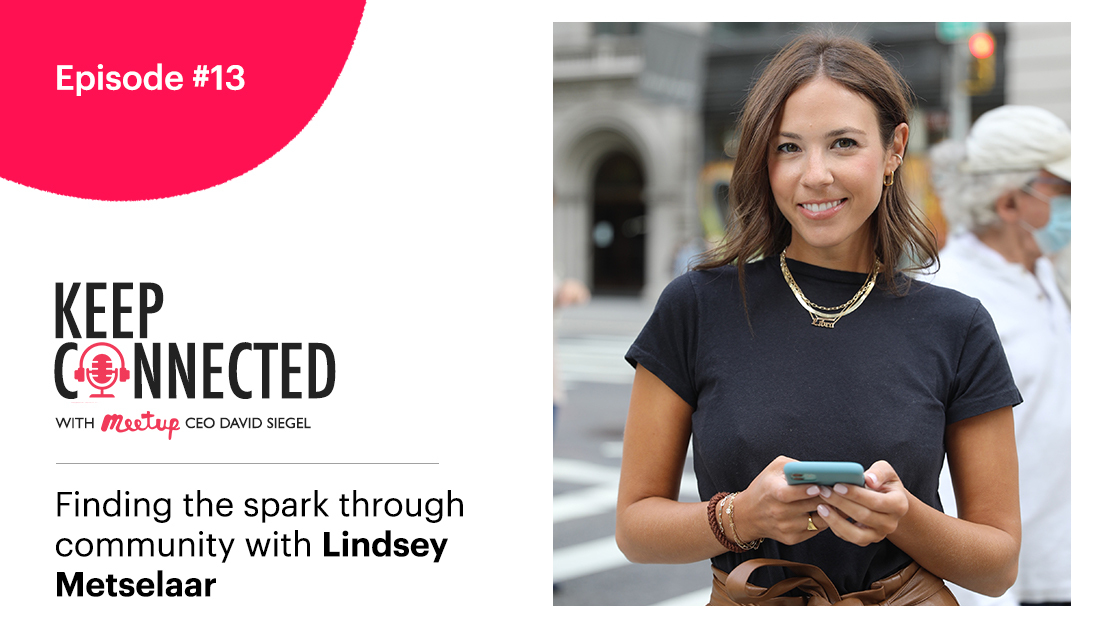
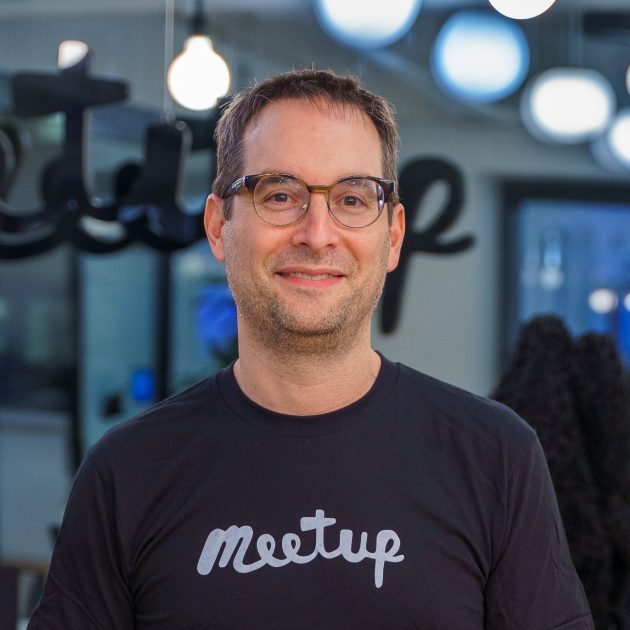


From dating apps to love languages, there’s so much to navigate in a modern relationship. Lindsey Metselaar, the host of the hit dating podcast We Met at Acme, joins Keep Connected to discuss the role community plays in romantic relationships. Hear Lindsey’s advice for meeting new people, hosting singles events, and using technology to spark genuine connections.
Ranked as one of the top 25 CEO podcasts on Feedspot, Keep Connected with Meetup CEO David Siegel is a podcast about the power of community. For more details on other episodes, visit Keep Connected on the Meetup Community Matters blog.
We hope you’ll keep connected with us. Drop us a line at podcast@meetup.com. If you like the podcast, be sure to subscribe and leave us a rating on Apple Podcasts!
Learn more about Keep Connected host David Siegel’s experience as a leader and decision maker in his book, Decide & Conquer. Pre-order your copy today!
Finding The Spark Through Community With Lindsey Metselaar
In this episode, we’ll be talking to Lindsey Metselaar, the CEO of Lindsey’s Lunchbox and host of the We Met At Acme podcast. We’re going to be talking about dating, sex and relationship advice. Advice that anyone could learn from, no matter your situation. I hope you enjoy this episode.
—
Lindsey, welcome.
Thank you so much for having me.
Thanks for being here. I love your podcast, We Met At Acme. You’re an expert on dating, sex, and vulnerability in relationships. You help your clients on organizing single dinners, on dating and you understand the power of community, which is a big part of Keep Connected. Anyone with your background likely has some story or reason that you have this following around dating, sex, and relationships. When did you know this was going to be your life’s work? How did this happen? I love to learn.
It became my life work just like a coincidence because I am a very curious person and all I want to do is know about everybody’s lives, especially their dating life. I found myself in a weird situation at 27, dumped on my birthday, and left with everything to figure out when it came to dating there were no dating shows for me to listen to at the time, which is wild because podcasting has blown up since then. I was like, “Maybe I should start a dating show where I learn to date better.” I had a bit of a jumpstart because I was the one in my friend group that everyone went to for dating advice, but it was like the blind leading the blind, as they say. I realized that I needed to know a lot more.
Teaching can be the best learning. It sounds that you’re teaching lots of others and you’ve also learned a lot yourself. What are some of the most teachable moments that have personally impacted you?
I know so many teachable moments that have happened so far. One of the biggest was I had a guest early on. I think it was the 20th episode and I was complaining about something my boyfriend at the time did. Every time he would use the bathroom, he would put the seat down, the whole thing and close it completely. It’s different than the man leaving the seat up. He would completely close the bathroom. As a woman, I go in my intention is naturally to sit down on the toilet, but I’m sitting on the lid and I’m like, “What is going on here? This is so annoying.” I was complaining about it to a guest of mine. He was like, “Is it about the closing of the lid of the toilet or is there something more there that you need to explore?” I was like, “No, it’s about the lid.”
A couple of months later, we break up and it hits me that it was not about the lid. It was about the person. That was a very teachable moment for me. Also, I realized throughout the show that if you’re confused about how somebody feels about you, they’re not interested in you. That took me years to come to terms with because I’m very good at rationalizing and justifying like many women are and I’m sure men too of like, “They were busy. They don’t text. They’re not a texter.” There are so many excuses we tell ourselves. That was a learning moment for me too. The last one I would say is like, “When someone shows you who they are, pay attention. It’s a huge one.”
I love your statement about, “I’m not sure if I would love, then you’re probably not.” I think that’s a great one. I always say to people, more about work, “When you’re interviewing, dating is a good prerequisite for marriage and if you’re not sure during the interviewing process around dating, then chances are those things are going to get exacerbated when you start your job.” All those statements. I was introduced to you through your uncle. Who’s a wonderful guy, I have to ask, with the topics that you cover, does your family get what you do or are they flummoxed by it? What do they think about it?
It took a long time for them to come around, I’m not going to lie. When I first started, they were like, “You’re talking about sex openly. That’s horrible.” I was like, “No, that’s not what this is, but sure.” As we got a bigger following and became more of an established show, the respect has come. I think that’s with everything that you do, that your parents don’t choose for you, they’re like, “What are you doing? What is this? You’re starting a startup. This is a terrible idea. You’re going to lose money.” It starts to be successful and they’re like, “This is an amazing idea. I told you about it.” Now my uncle, who is an amazing guy and is single, comes to me for dating advice. It’s funny because we have an age difference yet he now sees that I have amassed this knowledge when it comes to dating. That’s a good feeling.
Speaking about the importance of surrounding yourself with family and community, I want to hear your perspective on how does community helps to support dating and relationships? What could we do more around the community and what could we do in helping others from a community perspective? I would love to hear your thoughts on that and any specific examples as well would be wonderful.
If you’re confused about how somebody feels about you, they’re not interested in you.
Community is everything when it comes to dating, especially because our friends are not the best people to go to for dating advice. It’s a fact. For so many reasons, but also your friends are so not neutral. Your friends are so invested in you. They’re invested in your partner. They maybe have seen things that they shouldn’t see or whatever it is or they are biased. If there’s a community aspect to dating, we have a Facebook group for example and people go to it and they ask each other for dating advice because these are people that don’t know each other but they know each other.
On the other hand, the community is so important for dating because you should be able to meet as many people as you can and at least have that friendship vibe first and then see if there’s something there. That’s why community is so crucial. It’s almost the opposite of a dating app where it’s a one-on-one, almost interview-type thing. A community is like, “We’re all meeting up together. We all have similar interests, then if there are sparks, great.” That’s why so many people like we’ll meet at work or they’ll meet like on a football team or whatever it is because of that community aspect. It’s so important when it comes to dating.
Perhaps the friendship vibe goes all the way back pray even before the When Harry Met Sally, a movie in the ‘80s. I was fortunate to have met my wife in college and we were friends for one year and everything has blossomed since then. In our world, it’s dramatically more difficult, especially during COVID-19 to build those friendships prior to dating. I think your counsel is great, but what specific advice would you give to people knowing how important community is to build those friendships that hopefully can set the relationship in the right place?
It’s so important that when you meet someone and everyone’s like, “What’s your first date advice? How do I not get scared on a first date?” I always say like, “Act like you’re making a new friend because then you go in with zero expectations.” In turn, you’re building your community because if it doesn’t work out, then you have a friend. I think if you have the ability to turn something that didn’t work out into a friendship, then you have great community-building skills.
That’s incredibly helpful because people don’t have that anxiety if they’re going to meet someone for a coffee and it’s a platonic thing, it’s not going to necessarily lead to more. That’s where you could be your most vulnerable self. That’s when you could be your true self. People get caught up and potentially, you will know better than I do in trying to be someone that they’re supposed to be on paper. That doesn’t lead to usually productive places.
That’s why you love to hear the story of people who met up for a networking lunch or a coffee then fell in love because neither of you is trying to be this desirable match for the other. You’re coming in with an agenda that has nothing to do with that.
You have organized single dinners and I imagine the stigma, perhaps of two singles dinners. First of all, I love to hear what you do at the dinners to build community? What you do with the dinners to make people feel excited about it, not like, “Yet another singles event. Who knows the quality of the people that are going to be there?” Share with us something that I think could be helpful for many, both in terms of singles events but possibly for events broadly.
I worked with a friend of mine named Josephine and she comes from this very curated events background where she knows how to make an event look enticing to people. She is good at making it luxurious and high-end. It has to have that aspect, that scarcity value. Also, a good branding for the invitation and whatever. Once you’re there like, “What are you offering these people?” We work with a restaurant to get them an open bar for the night. That alone could get a few people in the door. That’s an easy cop-out and once you’re there, you have to distract them from the fact that they’re meeting people. We do these fun games where you have to interact with everyone at the table. It’s not like, “Look to your left and ask the person where they’re from,” because no one likes that awkwardness.
You make each table do something together like group building or bonding exercises like you would do at camp. For us, on our podcast, we do red flag or deal-breaker-type questions. We’ll say like, “They only kiss with their eyes open, red flag or deal-breaker. They talked to their mom three times a day, red flag or deal-breaker.” The table then discusses their own experiences and they bond. You then see, “The person across always has the same answer as me. Maybe they’re someone I should take seriously.” We love the icebreakers.
I love how the questions are comfortable enough for people, but they’re not like the standard chocolate or vanilla, things like that. They’re related to intimacy and relationships without going over the line. I think that’s important because you could learn so much. Talking about all the things that you advise people around sex, intimacy, any advice that you seem to see the same themes coming up over and over again and like, “When I write a book, not if when I write a book like these are the themes that I keep seeing around sex and intimacy.” What are some of the themes you would share with others?
The first one I would say is to stop asking, “What are we?” It’s the worst question of all time. I feel like, as a man who has dated women, you can probably agree. It’s like, “I don’t know. I am getting to know you and I’m sure that you will know what we are when we are something.” It’s this thing that comes up over and over again. It’s like this ultimatum that so many women think is a good idea.
I wonder if the reason for the labeling is because people need to communicate to their friends who are asking them, “Where are you going? Where is this going on right now?” That label helps them to then say, “He or she told me that we’re exclusive.” They need to be able to communicate something to their friends because their friends keep pestering them. It goes to what you had said earlier. The toxicity of sometimes a friend and be yourself, do things for yourself.

It goes back to the friends. It goes back to depending on how much you share with your parents. Your mom is saying, “Is he your boyfriend yet? What is this person? When are we going to meet him?” There’s so much toxicity in getting other people involved in your premature relationship.
That’s number one. I’m greedy. Give me two more.
Number two, I would say communication is terrible for Millennial dating. There is a huge lack of communication, especially around sex. There are so many women who just accept the fact that sex isn’t about them still and it’s so upsetting. I think there’s this shame around taking pleasure in sex and it’s so odd to me that it’s still a thing, where I feel Gen Z is all about it. They’re very liberated sexually, but for some reason, my generation is very much like, “Let’s do it and not talk about it.” I think that’s a huge thing that I would say is like, “Check-in,” whether it’s during sex, after sex or before you even have sex, talk about what you like, talk about what doesn’t work for you and so that’s a big thing that I feel probably could apply to every generation but specifically to mine. I’ve heard so many women be like, “I’ve slept but I’ve never had an orgasm.” I’m like, “What?” like why? This is almost on you that you haven’t had this discussion. You’ve been in a four-year relationship and you’ve never had this experience. I’m like, “What are you guys doing?” That’s another big one.
That applies to dating and marriage, no matter what the age is. You could be 80 or 100, hopefully and it’s applicable to all time. I don’t want to guess why it’s not an issue for Gen Z because that’s interesting and also wonderful to hear.
Gen Z mystifies me. I can’t tell you. I have so many questions, but I feel like because they don’t traditionally date. They have sex and then they’re like, “What? Should we date?” I think that’s more of something that they have no problem doing, which is amazing for them. If they’re being safe and whatnot but I feel like, for Millennials, it’s still like, “No, 3 dates, 4 dates, or whatever it is. We’re a little buttoned up and they’re way more like we have green hair and it’s so cool.” I feel like that’s the vibe.
Which means they can prioritize themselves and their needs, potentially greater than other time first. How about you hit us with a third, if you don’t mind?
A third one and this has become very controversial, especially on Tik Tok. I’m a little traditional and that I think when a man is dating a woman like she should let him pursue her and that’s me. For example, if I went on a date with a guy and he bought me two drinks and I said, “Thank you and I was grateful on the date.” Like I went for the reach and he was like, “No, I got it.” I was like, “Thank you so much. I appreciate it. This was a great night.” He walks me home, maybe we kiss or whatever. I don’t think that the woman needs to then text the man again or the next day and thank them again for these drinks. This is something that needs to stop. It needs to end.
My book would be called stop thanking men so much. It’s ridiculous. If a man is interested in you, he will reach out the next day. You don’t have to ensure that by sending another text, thanking him again. If he wasn’t going to text you, obviously he’s going to respond to be nice, and then you’re also in this confused place where you’re like, “He responded to my thank you. Is he into me?” Let it happen, then if he reaches out to you, you’ll know he’s into you.
I will hopefully not use that advice based on my several years of marriage, but hopefully, very many will benefit from it. It’s interesting to hear about Tik Tok, which is very much a Gen Z platform, more so than other generations, but increasingly used by many. We’re in the state of COVID-19 for 2020. We’re hopefully emerging out of it. There are many people that would give all the lists of like, “Here are the 10, 20, 30 reasons why COVID-19 has been terrible for dating and relationships.” I have no doubt that many people could come up with that list and it’s easy. I want to hear if there are ways that it’s been positive. How has it potentially in your mind solve some of the challenges that people are seeing? Do you think that it will help people when we get back to the post-COVID-19 world or do you think people are going to go back to the way that they used to do things?
I think that it has solved a lot. I feel like pre-COVID and I know this for a fact because I was sitting with a friend pre-COVID, and she was talking to a guy on an app and he was like, “Can we FaceTime first? She was so taken aback.” She was like, “What? This guy’s a psycho, absolutely not.” They FaceTimed and I don’t think he was into it after. It was the biggest deal on her end, “I can’t believe he FaceTimed me and he wasn’t into me. We went on a date.” Do you understand how much time you both saved by that FaceTime? I think now this whole like pre-screen call, Zoom or FaceTime is so great for us. That has been such a helpful tool to connect with people before you’re able to be in the physical world.
Also, it’s a protection situation. I think for so many women dating, it can still be scary. You don’t know what you’re going to get and especially if it’s hard to cross-reference a guy that you’re going out with. This is the perfect opportunity. I hope that it’s used post-COVID to see if someone’s going to be worth your time or that you’re going to feel safe going out with this person. I think that should continue but realistically, I don’t think it will. I think that the second everyone can go back to normal, they’re going to go back to normal and it’s going to be, as people are saying, the Roaring Twenties.
I guess I’m a little bit more optimistic that the efficiency and also the psychological and real safety will impact some men and women that, “We could do a 15, 20 or 30-minute Zoom before we commit ourselves to the full 2 or 3 hours getting there, being there, etc. and costs.” I’m optimistic and I think there’s a lot of opportunity in the business and also in personal where people will connect on Zoom hopefully first. I’m hopeful, especially as apps start even more integrating with video platforms than they are right now and make it more of an accepted way in which to have the first communication. I’m hopeful but we’ll see. Millennials, Gen Z and everyone does suffer from loneliness and through your working community, through your working relationships. It very much is impacting the loneliness epidemic. Do you see the loneliness epidemic getting better? Do you see a path towards it improving? What is that path because it’s reaching potentially greater proportions than anything I think we’ve ever seen?
It’s destructive to involve other people in your premature relationship.
It’s difficult but again, it goes back to the community. It’s all about having a community, whatever that is. Maybe it’s like a Reddit thread that you go back to. Maybe it’s a Facebook group. Maybe it’s an Instagram that you check often, but I think it’s so important to have that community aspect. That’s why an app, Clubhouse, for example, is doing a good job of making people feel connected. Mark Zuckerberg was in a Clubhouse last week and I was able to jump in and I felt I was on a conference call with Mark Zuckerberg. If I were someone who was lonely, that would’ve made my entire month. Even though I’m not super lonely, it did in so many ways. That’s the great part about technology and social media. You might feel alone if you’re doing the comparison thing but if you’re using it in ways like you don’t, you don’t feel alone.
Very well said and we say it all the time. We use technology to get people off of technology. As you said, “If you use technology the right way, then it can have a dramatic impact and building meaningful relationships.” You talked earlier about sexual suppression and I’ve heard you in your show and other places talk about it where a generation of suppression. If you don’t mind, elaborate on this more because I think it’s a very important message for people to evaluate for themselves.
I think a big problem with my generation and Gen Z is we play this game of who can care less. We talked about this in an episode, but I quoted Taylor Swift and she has a song where she goes, “This is looking like a contest of who can act like they care less it.” It does become this contest so often and it’s sad. I think because of social media, the comparison, and everything, especially in like breakup culture, there’s this, “Who’s doing better after a breakup and who is moved on quicker?” We don’t have this moment where we sit with the vulnerability of things and I feel like that’s what’s being suppressed is your true feelings and emotions. You go out on 4 or 5 dates with someone and you send them a text, “I wasn’t feeling that connection.” It’s like, “Why? Tell me more.” We all want to know more and we don’t find it out. We get broken up with and we never know why. All of a sudden, the person doesn’t care and doesn’t care publicly because that’s what they think that they should do. I think we’re suppressing so much emotion and it’s sad.
How much of it in your mind has to do with low self-esteem? I use the term self-esteem versus confidence because I’ve always believed confidence is how you externally portray yourself to others. Self-esteem is how you internally feel about yourself. Do you think that so much of this comparison to others, suppression of yourself, looking at how you’re doing versus someone else doing post-breakup, a potential need for explanations for why things didn’t work out? Does it all come back to self-esteem or am I overplaying how impactful self-esteem is?
No, it definitely comes back to self-esteem and unfortunately for so many people in this world that we live in, self-esteem comes from how you portrayed other people on social media and whatnot. The last thing that you would want as someone who has low self-esteem is to come off as someone who’s grieving or someone who’s not doing so well.
You don’t seem like someone who has low self-esteem. Let me say that.
That’s kind, but I also do a great job of acting, faking it until I make it sometimes but I also think that self-esteem comes from doing esteemable acts and showing up for people in your life. For me, if you found me a few years ago, you would literally say the opposite. You’d be like, “Lindsey, it seems like you are someone who has low self-esteem.” I would be like, “You know what, David, you’re right,” and I’d probably start crying. It’s taken like a long time for me to get to this place. Also, I’m passionate and so proud of where I’ve come with my show but again, three years ago, I had no idea what I was doing. I was so embarrassed to say what I did.
For me, my self-esteem also comes from what I do. I define myself by what I do a lot of people don’t and maybe they define themselves by like how good of a dad they are, but as someone who doesn’t have that in my life yet, especially when you’re in your twenties, you’re defined by, “What are you doing? That’s cool.” Mark Zuckerberg started Facebook when he was 26. “What are you doing? You’re 26,” and I think it can be difficult to be on a date with someone and have to say what you do and then not be impressed.
Everything you’re saying is so true for so many people. I perceive that one of the ways in which you have helped to grow your self-esteem is yes, you’ve had success, which is helpful, but I think you’ve also confronted it and my understanding, especially listening to your show, is that your therapy and mental health is something that you’re a deep believer. You had a show where you recorded your session with your therapist and shared it with the world, which is like an amazing opportunity for people to learn and as you’re a teacher, people to learn from you. Do you have advice for people around, should everyone that be going to therapy? Is therapy right for you and for certain other people? Anything you could share around that because you’ve been such a public supporter of it would be helpful for others to hear about.
Therapy is incredible and I’m so happy you brought it up because that was the one thing that I forgot to say in my self-esteem rant, which is that therapy is a huge reason that I have any confidence in myself and self-awareness because it all comes from being self-aware. If you’re not self-aware, you have no self-esteem. They go hand in hand. In therapy, I learned to see myself the way that other people see me. Instead of being so difficult on myself all the time and therapists tell you, “Talk to yourself how you talk to your friends.” It’s about being kinder to oneself. Therapy changed my life and the most impactful therapy for me was Cognitive Behavioral Therapy.
My uncle, it changed his life too, so many other people that I admire have benefited from this therapy. It’s action-based therapy where you can learn to control your emotions, understand your triggers and practice mindfulness. That has been huge for me. I do think everybody can benefit from therapy. It doesn’t matter if you think you’re perfect, then you’re probably a perfect candidate for therapy because that’s how most people feel going into it. You don’t have to wait until God forbid you to lose a parent or go through a divorce to get into a therapist’s office. It’s for everyone. It can help.
I guess you’ve motivated me to tell my very quick therapy story myself.

Please. I knew you had one. I felt it.
You could tell how I act that I must be, which is a compliment. When I was in college, I read this very special book by M Scott Peck called The Road Less Traveled. It’s an incredible book and it’s a book by a therapist. In the book, he basically says that every single person should go to therapy. I showed up twenty years old in college to my college guidance office. I said, “I read this book. I have to go to therapy because this book said that I have to go.” They said, “We’re going to sign you up for five sessions.” I went for five sessions because I said, “This is a part of growth as a human being and then at the end of the five sessions.” The therapist said, “We’re allowed 1 or 2 people to extend for an extra five. I’m going to invite you for that.” I wasn’t sure if that’s a compliment or what but it was a positive life experience. I think it came from the fact that this book and people like you did such a good job in normalizing things and emphasizing the value of it for everyone, which I, by the way, I’m a deep believer in. That’s my story.
I love that you were able to not see therapy as a failure. That’s the biggest problem that men especially have is like men see going to therapy is like they’re psycho or they’re mentally ill and it’s not so black and white. You can go to therapy for business. You can go to therapy to be a better boss or a better employee. You can go to therapy to be a better friend. Again, you don’t have to have a reason.
I want to do the one last question before we go to a couple of rapid-fire questions, which is one of the things I’m sure you’re also proud of. I’m sure your parents, uncle and friends are also proud that yourself is your company. Lindsey’s Lunchbox, where you advise clients and social media and you help them. We have 200,000 plus Meetup organizers and 330,000 groups. Many of them are small and medium-sized businesses. They’re looking to grow their social media presence. I know this is a very broad question but again, I’d love to hear if there are certain themes that you tend to see small and medium-sized businesses or individuals that want to grow their presence, mistakes that they made and quick fixes that they should be cognizant enough.
I would say mistakes are not standing out. For example, I think that there are enough drinks that have come out, these new canned drinks. If I see one more of these drinks that I can’t have anyone explain to me why they’re different than the other, it’s mind-blowing. I feel I get sent one of these every day and I am like, “What makes this different?” I’ll even go on their social media and they’re like, “The new fizzy thing.” I’m like, “Nothing.” I think the thing that people do correctly is create original content around their product. Humans of New York is an Instagram account. I think it’s a book. I don’t know what else it is, but they share these very intimate, emotional and touching stories about different humans and we see a photo of them, then we get their story in the caption.
When I’m working with a brand, which I am moving away from and more into the show full-time, but like when I was working with brands, it was so important for me to tell them that they have to connect with their audience emotionally. If there’s no feeling about this brand, then they’re not going to care. For example, let’s say I was working with Dig Inn. Dig Inn is great. The food is awesome, but, “Why are we standing out?” Maybe we’re spotlighting Dig Inn workers and like what their life is. It’s getting more into like the heart of it and connecting the emotional side rather than like, “Look at our new broccoli. It’s amazing.”
The overly promotional and factual doesn’t work. It’s about building emotional connections and figuring out a true differentiator. I love both of those concepts. You’re a differentiator. You’re a differentiated person. You’re a special person. We have some rapid-fire questions. I’m asking for 5 to 10 seconds, super quick answers. Here we go. The first question. The first time a community helped you in life?
Growing up. You can’t raise a child on your own. It takes a community.
First job?
I was a production assistant on the set of a Discovery Channel show called Hustling the House. It was about Poker.
I do not want to play any Texas Hold’em against you. If you could access a time machine to go anywhere you want and anytime you want, where are you going? When are you going?
Woodstock is like a fun moment. I would probably way hang out there.
If he reaches out to you, he’s into you.
I’m sure you would add to the fun festivities as well. First thing you do when you get up in the morning?
I make my bed. I feel it’s so important to go back into a made bed. It’s part of self-care.
One of these things that you don’t want each day, especially during COVID-19, to blend into every other day. It’s like the separation of one day to the next is the made bed. You don’t tuck the sheets underneath. Do you? You’re a sheet tucker. Anytime I’m in a hotel and they’re tucking the sheet, I’m kicking that off. I cannot have it off.
I do kick it off, but then I retuck it in the morning.
Favorite quote?
“When someone shows you who they are, pay attention.”
That’s very consistent with some of the advice you gave in the beginning about listening and understanding people. I’ll ask two last questions, which is something on your bucket list?
I would love to go to Barcelona. Everyone I love loves Barcelona and I would love to experience it.
Last question, which is you have evolved so much as you’ve said, what do you most want to be remembered by in many years from now?
How good of a sister, mother, a partner I was to my family. I think that’s the most important thing at the end of the day.
We should end with that. Thank you so much for being here and we’ve hit on so many wonderful topics and you’re a pleasure to learn from, so thank you.
Thanks, David. This was awesome.
—
Thanks for reading this episode with Lindsey Metselaar. One of the things that struck me was her ability to be so open and honest about her personal growth over the last three years, from lacking self-esteem to where she is now. Some of her thoughts around dating stand out for me, both for dating and also for life. Understanding when friends can be helpful for advice and when friends may not be as helpful for advice and thinking about that first date, sitting down with a friend, getting to know them, and not putting that pressure on yourself. Hopefully, you loved this episode and you will be subscribing to the show. If you really liked it, write a review on Apple Podcasts. Let’s keep connected because life is better together.
Important Links:
- Lindsey’s Lunchbox
- We Met At Acme
- The Road Less Traveled
- Humans of New York
- Instagram – Humans of New York
- Apple Podcasts – Keep Connected with Meetup CEO David Siegel
About Lindsey Metselaar

Lindsey caught onto social media when she was a freshman at Boston University in 2008. Twitter had just started out, and, with a love for new technology, she decided to jump on the bandwagon fast. After creating the @Stonrgrlproblem Twitter account and reaching a following of 36K, Lindsey knew that this was the path for her.
A few years ago, she created a food Instagram called @DontExpectSalads. Since starting @DontExpectSalads, Lindsey has gained a following of 75K+, and has created or taken over 8 different social media accounts. After leaving her job as Social Media Manager at GoButler, she has decided to pursue her dream of opening her own Social Media Management Company, Lindsey’s Lunchbox. Lindsey holds a B.S. in Communications from Boston University, and currently lives in New York City.

Last modified on December 13, 2021