
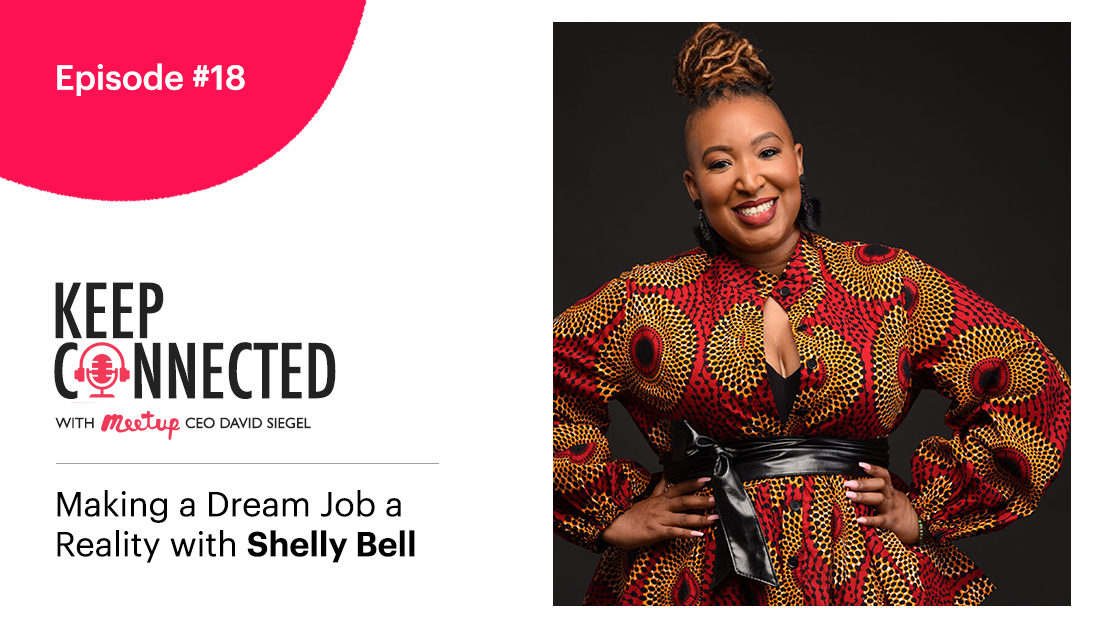


Entrepreneur and computer scientist Shelly Bell is on a mission to change the landscape of venture capital—and she’s using the community to do it. To date, her organization Black Girl Ventures has helped more than 250 women of color get the capital they need to launch businesses. Hear Shelly’s advice for finding your dream career, staying motivated in tough times, and solving problems creatively in this episode of Keep Connected.
—
Ranked as one of the top 25 CEO podcasts on Feedspot, Keep Connected with Meetup CEO David Siegel is a podcast about the power of community. For more details on other episodes, visit Keep Connected on the Meetup Community Matters blog.
We hope you’ll keep connected with us. Drop us a line at podcast@meetup.com. If you like the podcast, be sure to subscribe and leave us a rating on Apple Podcasts!
Learn more about Keep Connected host David Siegel’s experience as a leader and decision maker in his book, Decide & Conquer. Pre-order your copy today!
Making a Dream Job a Reality
In this episode, we are talking to Shelly Bell. She’s the Founder and CEO of Black Girl Ventures. This is an amazing woman who started a Meetup group and then has built a platform to help Black and Brown women have significant access to capital. Something that is a serious issue that exists in the world that we live in. I enjoyed this episode. I learned a ton and I think you will too. Enjoy reading.
—
Shelly Bell, we are so lucky to be talking to you. You have done it all. Computer scientist, teacher, entrepreneur, made one of the 100 Most Powerful Women in Business by Entrepreneur Magazine. You are an inspiration to all Black and Brown women, all women, all people and soon you are going to be an inspiration to all of our readers. Thank you so much for being part of the show.
Thank you for having me. I’m excited to tell my story, life and journey. The work that we do in Black Girl Ventures can inspire many more people around them.
You started Black Girl Ventures in 2016. You raised over $2.5 million for hundreds of Black and Brown female entrepreneurs. Tell everyone about Black Girl Ventures. Tell us about how it gets started. It’s all yours.
Prior to Black Girl Ventures, I lived many lives. For those of you out there who are career switching, thinking you are crazy, don’t worry about it. It never ends but there’s light all around the tunnel. A lot of people told me like, “You need to focus on one thing.” Honestly, I don’t like that. I do two things well. One thing, no but two things, I’m rocking and rolling.
Let’s hear the two things.
First, I always had a side hustle. I have always worked a full-time job and had a side hustle. The full-time jobs are the things you named. I worked in workforce development, running large contracts, for the Patent and Trademark Office, examining patents and as a teacher but on the side, I was building my own web development company.
I sold vacuum cleaners and lingerie. I’ve got myself a private eye at one point. I did performance poetry. I was always doing these multiple things at once. When I landed on the idea of Black Girl Ventures, I was running my own print shop. My mom had given me some of her retirement for me to launch my own print shop and a T-shirt line. It was working out well.
That’s a lot of trust and stress to get money from your mom. You know you’ve got to succeed then.
I built up to that because while I was on all my crazy side hustles, she didn’t give me a dime. There wasn’t a time I landed on something that she was like, “This is going to work.” That she then was like, “I will invest in that.” I was building my company. I learned a lot. I have ended all of it out on the East Coast. The news came out, Black women who started businesses at six times the national average yet receiving less than 1% of venture capital.
If you don’t know what to do in your life, don’t worry about it. There’s always a light down the tunnel, not an end.
There are lots of news that came out about bank discrimination for people of color and things like that. I was like, “I know what it’s like to need access to capital. I can do something about that.” Lots of micro ventures were me saying, “I feel like the community can do something about it. Let me pull a bunch of people together.” What’s the best place to pull a bunch of people together that care about a central idea? It’s Meetup.com.
Here’s my history of Meetup. It was a way like in art where I would pull people together to do different art engagements because I was doing performance poetry. I would pull different writers’ groups together, whether it was women’s writer’s group, working with the LGBT community, working with writers in general. We would come together. I would run a lot of these things to Meetup because I knew it was a place where I could find people who cared about writing that wasn’t already in the community.
That was the key for me. It was finding people everywhere that cared about a central idea, pulling them together and not creating a silo of people I knew. I said, “I have a little bit of a brand.” I created this Meetup. When I created this Meetup, it originally got a Black Girl Vision. I put what we are going to do on it. We are going to have a brunch and everybody is going to get together, listen to some women pitch their business, throw some money in a hat and give it away. Many people joined it. Within the first week of me putting it up, 50 to 100 people joined. I was like, “I’m onto something.”
Shelly, what was the original Meetup? Was it people from all different backgrounds? Was it mostly people who were Black and Brown? Walk us through what that looked like at the beginning of the first 20, 50, 100 people.
First, it was all Black women. When we did the first event in a house in Southeast DC, it was a brunch. We’ve all got together. I ran the whole thing like a poetry slam. Following a pitch, we voted with marbles and coffee mugs. If you liked that person, you would put your marble in their coffee mug. I realized through that experience to the question you are asking me is that it was mostly all Black women. We would do it in restaurants and different places all using Meetup. I put it on Meetup and people would show up.
I started saying, “Let’s go into community spaces.” I started partnering with coworking spaces like MakeOffices. We work for us to go into spaces that were a little bit more diverse because I didn’t want to create a silo but still using Meetup so people can RSVP plus coupling that with Eventbrite, and then landing on people being able to come. Thinking about diversity, I changed the tagline. Creating the tagline was what helped me diversify. It was Black Girl Vision and then Eat Pitch Votes. The tagline was, “Everyone can attend but Black and Brown women will win.”
It’s great because the reality is everyone wants Black and Brown women to win but to only have people who could contribute to being Black and Brown women will limit the potential impact, dollars raised and venture that could be provided. There are amazing ideas that are coming out of this organization. Why not open up the opportunity for funding many people but have them fund Black and Brown opportunities, which was incredibly underfunded, as you referenced as well?
I knew that I had to break that silo down if I was going to get as much capital as I could into the hands of the founders. There’s nothing wrong with affinity groups. Affinity groups are great places for you to find commonality. Even inside affinity groups, you can get different perspectives. You can also find other solutions to things that you may be dealing with, the challenges, understanding each other. You need that. There’s a place where you go out among other people. Figuring out that the finance world is Eurocentric, figuring out how to move and navigate through to raise the best capital that you can raise.
I knew that we were going to need different voices. Money is green. There’s nothing wrong with putting the people with the most need on the stage, putting with the people who can help in the audience and having that helped be real-time. The way it works is like Shark Tank meets American Idols. You vote with your dollars, whichever pitch you within the competition, you vote with your dollars for that person’s pitch and then we grant that capital to the founders.
Could people vote $10 or $1,000? Was there a minimum and maximum, or was it just open?

Back then, it was all open but now we do at least ask for a minimum of $5. People would give $1 but then people started getting smart about playing the algorithms to win. We started giving out bigger prizes. 1st place gets $10,000, 2nd place gets $6,000, 3rd place gets $2,000, plus everybody gets whatever capital they raised. We grant that part of it out to them and we put another part of it into a fund so that we can invest in women.
There are so many questions that I have. I want to hear about success stories and challenges but I want to get back to you a little bit more because you are such an interesting person. During this time, were you working full-time? When did you finally decide that this would be your full-time single gig perhaps, even though that’s not something you would typically do? That’s not an easy decision.
When you are working full-time, I also want to hear your perspective on this. There are a lot of entrepreneurs who work full-time and have a side gig. It’s very hard to stay motivated in that full-time job. Were you able to stay motivated in that full-time job to try to kill it in your day job while you still have that night gig? What advice would you have for people around them? That’s a tough situation, which a lot of people confront.
When you are working your full-time job, for me, a full-time job became a funding source for other things that I wanted to try out. If you are risk-averse or conservative with the way you spend, it’s a great idea to stay in that full-time job as long as you possibly can until you land on a model that works. The key is like, “Does your model of business work?” The evidence of that working is revenue you can pull in. If you have the space in your life to stay on a job until you land on a model that can replace your income, 100% I would say, “Consider that option.”
Entrepreneurship should be available to everyone. Throughout your life, you should be able to be an entrepreneur or be an employee and back and forth. No one should think about it in any kind of way. Hiring managers shouldn’t feel like you were sleeping on a couch all years because you decided to be an entrepreneur. That’s so not true. In fact, you probably weren’t sleeping at all.
Stay in your full-time job, as long as you possibly can, until you land on a model that works.
Thinking about a career from a fluid perspective and understanding that you could go full-time, part-time, no time, and have your side gig be your full-time gig is not a failure. Too often, people look at people’s resumes. They went from associate to manager, manager to senior manager, senior manager to director, director to vice-president. That’s the way it’s supposed to be. I don’t believe that’s necessarily the case. Great people understand that fluidity.
You are building a skill. The true future of work is skills. It’s not about titles, labels and positions. The skills that I built there being an entrepreneur is immeasurable, would go into any job and be unmatched. It could be somewhat of a fear that hiring managers have that it would be hard to manage you.
Shelly, talk about some of those skills. We have many entrepreneurs and Meetup organizers who read this. What do you think it was about your skillset that you honed over time? What were you strong in at the beginning and you have always been strong in? That’s part one and then part two, what were you not strong at the beginning, realized how important it was and then became a lot stronger later on? I would love to hear that.
One, I have always been strong at bringing people together. That, I knew I could do. Using Meetup as a vehicle, I knew that if I could get in front of people, they would come. Something I have always been great at is motivating, inspiring, moving people to act, change behaviors or teach. I’m a teacher naturally. I have always been great at it. The thing I wasn’t great at is time management. I thought I was so great at time management when I was at work. Come to find out, my job is managing all of my time.
It’s telling me when I can eat when I can take a break and when to be somewhere but I’m thinking like, “I’m so great at time management.” No, I was not great at time management. I was great at activating people, not great at time management but some of the skills come along. It’s interesting because we have done some research internally at BGV. We have found that while some of our founders were great at ideating and coming up with products, they weren’t as great at marketing their products.
I’m sure some Meetup founders either deal with those things or Meetup organizers deal with like, “I’m great at coming up with what my group should do but I’m not always so great in marketing to find new group members, maintaining or sustaining group members through marketing efforts.” That’s some interesting finding.
What did you do to grow your group, which you grew quickly and powerfully? You didn’t just get high quantity. You’ve got high-quality people to be part of your group. What did you do as a motivator and as a marketer? When you were five years old, you were probably the best motivator to other people playing with dolls out there and the best lemonade stand, whatever it was that you might have done at a young age because you are great at that. What did you do at Meetup to be successful there?
You had to know that the key is that the Meetup never ends. If you put all of your work into the front end and you get people there like, “It was a great time,” and then you are like, “I did that. We are done. I’m going to wait until I start the next thing,” you are starting from zero every time. You plan to keep the conversation going as if it’s a one-long text group thread. The other parts, I would say one, the Meetup never ends. We think about this with events, too. That’s how we focus on building community. The community is always active and the pitch competition never ends. These things never end. It’s a constant conversation.

The second part is it’s one thing to have a one-to-many experience. What you want to create is a many-to-many experience. In that case, all you did was create the container and everybody else did the rest of the work. I’m a stickler for experiences. I think about everything like how people go to the bathroom. What’s the route to the bathroom? What colors are there and the way the chairs are? I have gotten into so many little spats with event venue people. I’m like, “I want all these chairs close.” They were like, “We can’t put them close.” “I want them close together and close to the stage.”
It creates much more energy when all the seats are close. When the seats are right next to the stage, there’s a connection between the speaker and the audience. It’s this interactive experience versus other types of experiences. You have to sweat that. I love that you sweat that.
It’s the intimacy. People are joining your Meetup and your group because they want to be with other people. Remembering that people don’t just come for you, they don’t come for the cause. They come because they want to meet other people. That’s what you are facilitating. Technically, I’m facilitating experiences. I have facilitated this funding experience and then I created a tech product to help facilitate it even more.
That’s the other part. One would be thinking about how people arrived, knowing that it never ends. Two, the other piece would be thinking about how you create instead of a one to many, a many to many. The third part of that is then building off of what you learned so far to make it easier for people to connect on the next one. They will recognize that you heard them. They felt visible and that you are creating better experiences by adding simple little tools and tweaks.
Many community organizers think just from event to event, the glue, and what makes the real community is what happens in between the events. A lot of times, I like to say what happens in the parking lot after the event, in the sharing of the experiences after the event and in the spontaneity of relationships that spring up that have nothing to do with the actual original event but the dozens of relationships that happen. The event was happened to have been that glue that happened in the first place. It’s amazing, helpful feedback.
Let’s talk about the term motivation. This is something that you have a natural skillset in clearly. You use that skillset to motivate so many people, whether it’s your students in teaching, the many people that you mentor. Parse out for me a little more about what it takes to both motivate others and also to be motivated oneself. I would love to hear your perspective. If you have an example of a story of someone that you mentored around it, someone that you may have helped or someone that helped you.
It’s an interesting word, motivation, inspiration. It’s hard to take any ownership over, that’s what I’m doing. Using words like a motivational speaker is what you have to use because that’s what the industry knows.
It sounds egotistical and you are all that.
There’s nothing wrong with thinking you are all that. To not be able to hone in on what you are going to do to motivate people because it’s the person’s choice. Motivation and inspiration are not the choices of the leader. It is the choice of the people listening. You are just the facilitator but if people are not ready to be motivated or ready to be inspired, then they won’t be. Hopefully, the people who were the speakers and the leaders, you know that.
It’s almost like being a comedian. You can’t walk in and say, “Everybody in here is going to laugh once I get on stage.” You do that to hype yourself up but all you can do is concentrate on making sure your jokes are relevant, timely and you are in alignment with the audience that you are speaking to. It’s the same way with motivation and inspiration. It’s the alignment of timing, how you share it and the people in front of you, knowing your audience. It’s a big mirror, too. You are mirroring the whole time.
I used to do performance poetry and one of my coaches, another poet said, “While you are performing, look people in the eye and mirror whatever they do. If they raised their eyebrow, you raise your eyebrow. If they look away, you look away. If they sit up, you sit up. You will be surprised how effective it is.” An amazing, simple thing to do is that you are mirroring whoever is in the crowd. The best motivational speakers, in my opinion, come in with their bullet points on what they are going to talk about but they can bend that to the audience in front of them such that they are able to draw out what’s already there and already being filled.
Entrepreneurship is something that is available to everyone.
It’s connecting with the person or persons that you are speaking with, understanding what they may need and being flexible in how you deliver information. You also have energy and a passion about you and that’s got to help.
Also, funky hair and great lipstick help. It’s funny because a lot of people have asked me things like, “I know but this is you. Do you think other people could follow a formula?” The best thing you could do is be authentic.
Let’s talk about that Nike billboard. How did this come about? What was your first reaction? I saw a runner passing by and be like, “That’s you on the billboard.” How did that happen?
The Nike engagement with Black Girl Ventures, what we did was we created a fellowship, some murals, which will be coming out soon. I can’t wait to share the mural project. We were doing a pitch competition. When the announcement came out, that was through the foundation side. The business side came and said, “We love what you are doing. We also want to work with you. We want to do a few engagements.” I had no idea where it was going to go but I’m in this meeting and Nike is pitching to me. I told you I started it on Meetup in a house. To go from being there to be like, “Here is Nike pitching my brand to me.” What they want to do with me was surreal.
I’m like, “I’m going to ask for what I want.” They are like, “This is what we are thinking. Is there anything you are thinking?” I said, “I want to be in a commercial.” They were like, “No, we don’t think we can do that.” I’m like, “I’m here with you all. I’m in the room already.” They said no at first. I said, “What you are saying is not right now. Okay, I will wait. No problem.” As the conversation progressed, I ended up in the commercial, with the billboard and on Kevin Durant’s Instagram. I ended up being on NBA on TNT. It was so crazy because my kid’s father was calling me like, “People are asking me like, ‘What does your baby mama do because she’s on TNT?’”
What was different about it was it took us out of the social justice bubble a little bit. It put us into the, “Here is what it means to be an elite business athlete and a businesswoman.” Nike believes that everyone with a body is an athlete. It was new for them. They did a new thing with me. It was new for the realm of work that I do because it wasn’t just about activism or Black and Brown people at that point. Solely, it was but it was about women in general, Black and Brown women and business specifically.
Shelly, taking it back, it sounds quite analogous to your early days at Meetup when originally you had 5, 10, 15, 20 Black and Brown women and then you diversified. You said, “We want to have supporters and bigger than just something for Black and Brown women.” You are saying now, “We want to be bigger than just around social justice. We want to focus on entrepreneurship, have a much larger audience and invite larger people towards that.” It’s interesting how both sides have spread out, which is a great thing.
It has been an amazing journey. We work with Nike, PayPal, Visa and Kroger. We work with some amazing partners who care about the intersection of business and social justice. That’s where we sit. The lack of access to the same terrible capitalistic system as everybody else is still a Civil Rights issue. If it’s bad, then we should all have equal assets to the bad.

I don’t mean that things should be bad but I’m saying that it should all be equal access. This is an interesting time in our history. It’s the alignment of being ready. Any of the Meetup founders or organizers knew that partners are looking for people, women and tech. The thing is being ready and knowing that your Meetup is not just a little thing. It’s a big deal that you can bring people together.
Only about 40% of our Meetup groups have sponsors. Many people are Meetup organizers that say, “I didn’t realize I could have sponsors for my group. I could defer all my costs, make money off of my group and share it with people in my group as well. That’s a great thing. I should do that.” Thank you for bringing that up. It’s not something we talk enough about.
Even when it was small, the way that the system works where people can inquire, people would inquire to become my partners.
Not enough organizers realize that there’s a large avenue of people who are very interested, no matter how niche it is. Sometimes the more niche it is, the more enthusiastic people could be as well. I would love to hear some stories. I love stories. I don’t know about you but I get motivated by stories. Any stories you could share about Black Girl Ventures, people that you funded, people that are in the process of getting funded, people’s businesses have been able to take it to the next level?
We have Kendra Woolridge, who is the Owner of a company called Janet & Joe. It is a non-toxic nail care company. Through the website, we did the regular pitch and her pitches online. Somebody anonymously donated $100,000 to her company. This is “change your life” money. This is at the level of a founder who bootstrapped this. Her mom was sick. She wanted to have her mom see her launch the company. Her mom died two weeks after she launched the company. She had support from family and friends. When we brought her over to tell her that she had gotten the money, she thought she was coming to do a recap of her experience.
We told her that she had gotten $100,000 and she told us this story about her mom. She’s like, “It’s one thing when your family supports you because they are your family. To have people who don’t know you, see your story or see your journey and donate to you, it means a lot.” She was able to fulfill a couple of POs that she had on the table that she didn’t know how she was going to fulfill purchase orders.
She was able to work on getting into some stores. She and another woman in the cohort who owns a frozen yogurt company team up and become partners taking a nail care company and thinking of a type of nail color. Also, a frozen yogurt company, taking a type of flavor and putting those together. I would not have imagined that it would be able to bring this partnership together but what a great result from participating in BGV.
Did she ever find out who the donor was or never?
People don’t just come for you. They don’t just come for the cause. They come because they want to meet other people.
We don’t even know who the donor was. They won’t tell us.
What an angel and an incredible person that changed lives. I’m greedy. Tell me another story.
This is the perfect spinoff to this one. They became good friends and accountability partners who own the yogurt company. She owns a yogurt company and I contacted her to be a part of a Visa experience that we did together. She arrived on the set and said, “I want to get with you because I want to practice pitching because I’m pitching to Walmart. I’m working on how my pitch sounds like on what we can do.”
I said, “I know somebody at Walmart. Let’s figure out if we can connect you or something like that.” I gave her my phone. I said, “Can you write this email? I’m in the middle of doing this other thing but I don’t want to miss what you need. Write this email to this person, tell them this and then let’s go from there.” Immediately, our connection, he sends back a message. It’s like, “Yes, let’s do it.” He sends a calendar invite. We get to the meeting. We are talking and then come to find out he eventually was the merchant that was going to be her buyer. We had no clue, none whatsoever.
I was like, “Let me connect you to who I could connect you to help you grow.” She pitched to him. She is going to be in 500 Walmart stores. It’s the power of networking. She was already in the pipeline to pitch. She just so happened to have this product that was going to match up to his lane of buying. The ability to even connect to someone at such a large corporation means a lot for a founder.
One of the big challenges is not just the funding being less than 1% for Black and Brown women but the network and the relationships that people have. Your story is a great example where people have unfair advantages where they have relationships with people that could get them in front of people that other people don’t have relationships with. Your ability to help to galvanize the many to the many, the many people that will have relationships, the many other people that have relationships to help people out that didn’t necessarily grow up with those relationships has untold value for entrepreneurs.
To your point, it is the funding guess but all money comes from relationships, no matter what it is. I don’t care if you bought a product in the store. Your relationship to that item, to that thing you need also brings that money. The hard part is that people didn’t grow up with it, didn’t have parents that went to Harvard or who now their uncle is the investment banker. If you didn’t have that deep network and even if you can get access to capital to people, they don’t have the support.
Even if she’s able to get into these stores, we are here to say, “How can we help you push forward? What do we need to do? Can we get you more mentors? Can we get you accounting help? What might you need to be successful?” We had a similar start where one of the women who won our pitch competition had the opportunity to be on Stila Ulta Beauty but our partner, Rare Beauty brand, who we did the competition, helped her. They filled in the gaps for where she would not be able to hold the same capacity without a bigger and bigger team. That’s the key. Where can you fill in the gaps to add capacity such that it creates sustainability and longevity for companies?
You have coached thousands of entrepreneurs through Google. You are giving us insight into motivation, entrepreneurship and activism. I could talk to you for so long but we have a little section at the end, which is the not so rapid-fire questions. The first time you saw yourself as a leader, how far back does it go?
Probably the first time I’ve got about 250 people to show up at a BGV pitch competition. I looked down into the audience and was like, “This is real.” We went on to have a little over 300 people the next year. All these people showed up for something that I made up and launched in a house. I consistently have this feeling, too. We had a team retreat in Reunion, Florida in a fifteen-bedroom house. I’m like, “Going from this house and this living room on Meetup.com with this one small event to being able to bring my team of eleven people out for a week to work day in and day out, the impact is amazing. It’s surreal.” Me also moving more and more out of the weeks, the day-to-day and being able to own the larger group.
Tell us about your first job.
My first job was at my aunt, who was the Head Manager at a McDonald’s. I learned a lot of management from her because I saw her run everything. I saw how she managed us, increased productivity and what she did to increase productivity in the company. I automatically had a job when I turned sixteen because my aunt was the Head Manager at this McDonald’s.
To talk about juggling tasks and to flex so many different experiences is not easy. If you could access a time machine and go to any place in the world at any time, where are you going, Shelly?
I might try at Woodstock. I want to see the freedom that people had in this totally free to do whatever you want to do. It was fine. Everybody was like, “It’s fun. This is cool. You are good. I’m good. We good.”

It’s a nonjudgmental energy community, people feeding off of each other, learning from each other. Name one thing on your bucket list. You have so many things you have to do in the future. What’s one thing that’s on your bucket list to do?
I want to own my own fleet of hot-air balloons.
Explain.
I have a hot-air balloon tattooed on my arm.
Shelly is showing us an awesome tattoo with a mosaic of a hot-air balloon. That’s amazing. You have gone in hot-air balloons before. What is it, the freedom? What happens when you are in a hot air balloon?
This is crazy because my mom used to read to me every night when I was little the story about Hello Kitty who lost her kite and then some ambiguous-looking animal came to rescue her kite in a hot-air balloon. Ever since then, I was so fascinated with it. In my mind, the hot-air balloon had so many colors. It was beautiful and floating. Later on in life, I found this book. The hot-air balloon looked like a whoopee cushion. It had no colors on it. It was all pink.
It was suddenly my imagination that this hot-air balloon was not pretty at all. I was always like you can float over in a hot air balloon. I don’t know, it stayed with me. As an adult, I have been to Albuquerque, to the biggest hot-air balloon festivals in New Mexico. I rode on a hot-air balloon before. When you ride on a hot-air balloon, it’s much like being deep in water. It’s mute. There’s no sound. There is not even a bunch of wind. You are just floating. I love it.
First of all, there are many ways in which I could put you to the psychological analysis of those kinds of things with my armchair one-on-one psych class that I took in college. To me, what it almost symbolizes is freedom, transcendence, having a bigger picture of things and seeing things from a big vantage angle. That’s amazing how that children’s story had an impact idea. The last question, after 100-plus years, what do you want to be remembered by, Shelly?
Motivation and inspiration are not the choices of the leader. It’s the choice of the people.
The legacy that I built does not only do I make you feel like you can do it but I built a system for you to do it. If you feel like you can do it, then the system should be there for you to do it when it comes to business and generational wealth. What you want to do is to leave a legacy for your family. I feel like that is what I want to be. I want to be remembered as that fairy godmother feeling. It wasn’t a matter of the fairy godmother doesn’t give Cinderella magic. The fairy godmother pulls the magic out of her. That is what I care about.
That’s what makes us sustainable and scalable because there’s a process and the system towards it. Not to take the analogy too far but are you fishing for people or are you teaching people how to fish? We all know that it’s teaching people to fish, which is what you have been doing, mentoring and teaching that’s so incredibly powerful. Shelly, you are awesome. I am so appreciative. I’m glad that Meetup could play even a small part in building out and being the impetus around Black Girl Ventures. Black Girl Ventures is an impetus towards so many other things that you are doing. I wish you tremendous success. I can’t wait to see how the next years are going to be unfolding for you. It’s going to be fun.
I’m excited. Thank you so much for having me.
—
Thanks for reading this episode. Going from a Meetup organizer to having Nike pitch you is some incredible story. Let’s hope that will happen to all of our organizers. Shelly is focused on the intersection of business and social justice. Her philosophy is that Meetup never ends, and it’s a one-long continuous conversation and relationship. Speaking of relationships, the power of networking and relationships, how that directly leads to an investment. If you liked it as much as I did and I like it, then subscribe and leave a review. Remember, let’s keep connected because life is better together.
Important Links:
About Shelly Bell
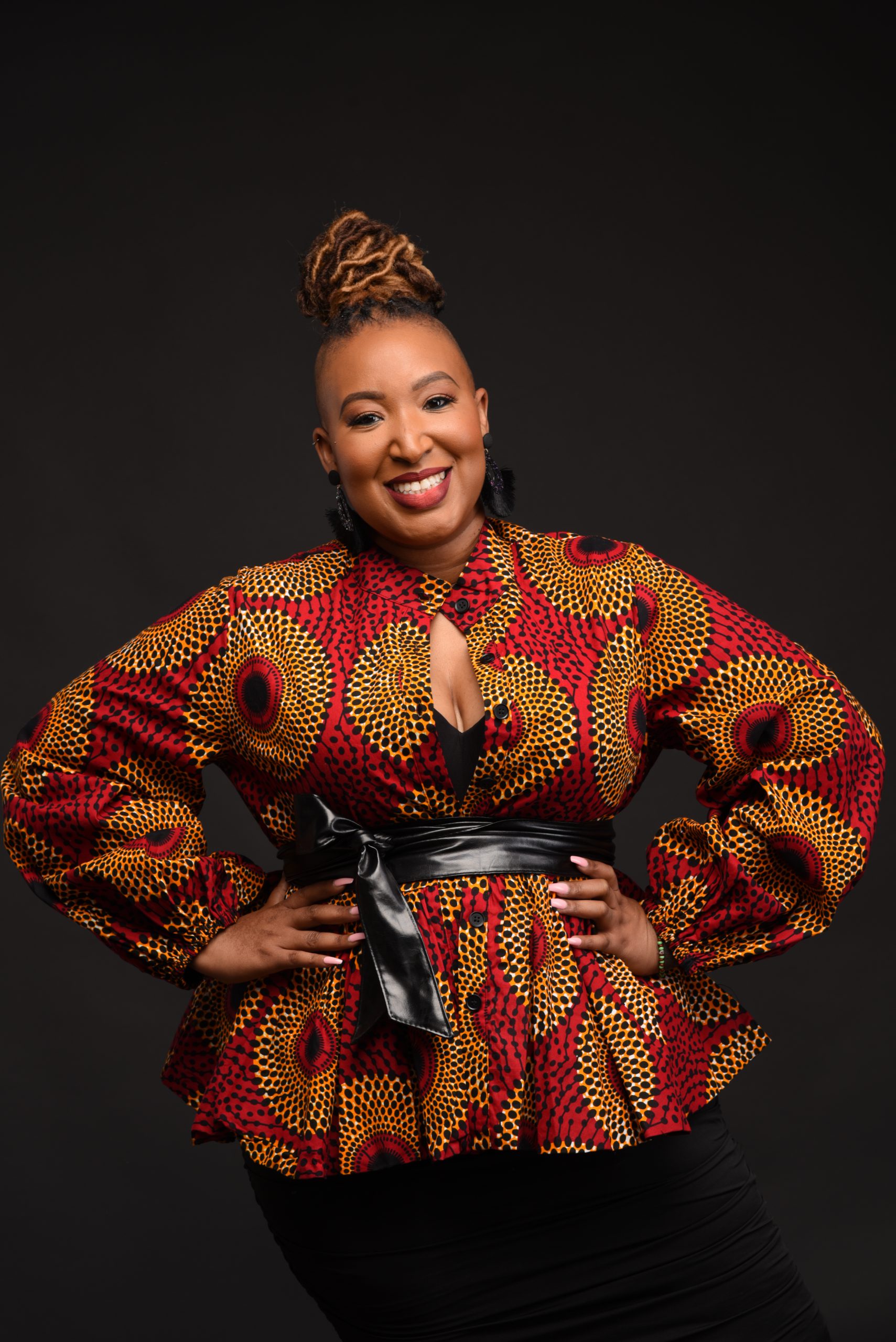 Shelly Bell is a system disruptor and business strategist who moves ideas to profit while empowering people to live more authentically. As a cultural translator, she connects entrepreneurs, investors, and corporations in order to diversify their talent pipeline, increase equity and grow their brands.
She is a Serial Entrepreneur & Computer Scientist with a background in performance poetry, K-12 Education and IP Strategy. She was named one of the Top 100 Powerful Women in Business by Entrepreneur Mag, Entrepreneur of the Year by Technically DC and acknowledged as A Rising Brand Star by Adweek. She is among the nation’s most sought-after inspirational speakers in the DC Metro area with features in Forbes, The Washington Business Journal, NewsOne, The Afro, People of Color in Tech and on Politico Live.
Her organization, Black Girl Ventures (BGV) is a social enterprise that creates access to social and financial capital for Black/Brown women founders. BGV travels the country with a disruptive pitch competition that shifts the power dynamics in funding by combining crowdfunding and pitching. As a Google Guru and Ecosystem Builder, she engages audiences from grassroots to government. Shelly has trained over 5,000 entrepreneurs, held over 300 events for empowering leaders, managed multi-million dollar contracts, and scaled over 100 businesses.

Last modified on December 13, 2021