
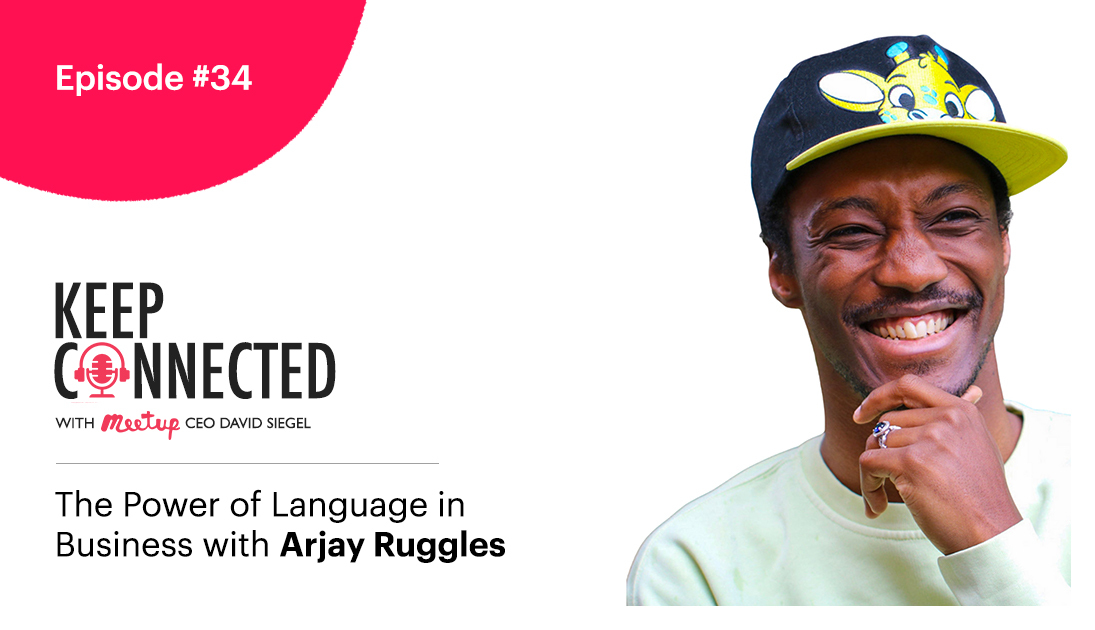
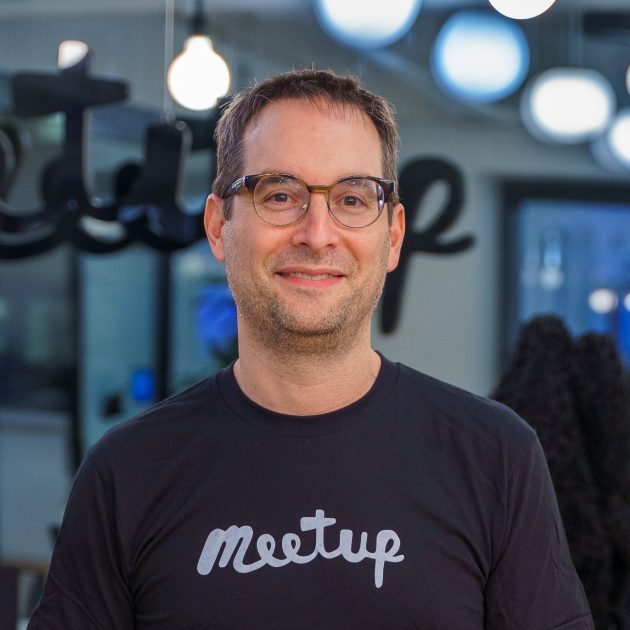


Arjay Ruggles has done it all. He was a self-described Neopets super nerd, a successful makeup artist, an IT specialist, and a sex worker before founding HomeRoom, the first-ever Discord community management agency. These days, Arjay is on the cutting edge of community-centered business, helping companies navigate the evolving tech landscape while retaining real-world values. He and David discuss the dos and don’ts of startups, user experience versus human experience, and how to stay true to yourself in a business context.
Ranked as one of the top 25 CEO podcasts on Feedspot, Keep Connected with Meetup CEO David Siegel is a podcast about the power of community. For more details on other episodes, visit Keep Connected on the Meetup Community Matters blog.
We hope you’ll keep connected with us. Drop us a line at podcast@meetup.com. If you like the podcast, be sure to subscribe and leave us a rating on Apple Podcasts.
The Power of Language In Business With Arjay Ruggles
Before we get into this episode, I have something important to share. Check out my new book Decide and Conquer to get to know my story at Meetup. The hardest thing about community leadership is making tough decisions when the stakes are high. I’ll tell you, they were never higher than when Meetup was owned and sold by WeWork.
In my book, Decide and Conquer, I’ll walk you through a counterintuitive framework for decision-making and the epic journey of Meetup’s surprising survival. Good leaders deliberate, great leaders decide. Order my book by visiting DecideAndConquerBook.com or anywhere books are sold. You’ll like it.
—
In this episode, we are talking to Arjay Ruggles, the Founder of HomeRoom, the world’s first Discord community management agency. There are so many great things to learn about Arjay so let’s do it.
—
Welcome to the show, Arjay.
Thank you for having me.
Arjay is the first guest who I can keep connecting with. We started in 2020 during the pandemic. We met in person beforehand in three-dimensionality.
I’m a real person. I exist. I have math to me.
It was so delightful to meet you in person. I loved it. Meetup is 74% in person. IRL is coming back. I want to tell you about Arjay. He is a Meetup member, Founder of HomeRoom, which is the first Discord community agency. You’re going to know more about that but first, Arjay has quite a special story related to community. Community is important to you. Talk a little bit about why it’s so central to your life. Has it always been so central? Share with us a little more about yourself.
One of the things about me is I’ve lived and breathed community since the beginning of the dawn of time for me. Out of the womb, I flew right into the community with my little gay wings. It was great. From the very beginning, I was super into it. I built my first computer when I was nine and started to teach myself C++. I was all over the message boards and all that stuff. I got into role-playing. I was a huge Gaia Online and Neopets super-nerd. I’m that kind of a dork.
Were you less comfortable talking to people in person at the 9 and 12?
Yes. It was my way to escape a little bit. I then got into WoW, which every nerd got into, which was a whole thing. The first person I came out to was my guild master on World of Warcraft.
What did the guild master say?
She was this 58-year-old woman who treated the guild like her new children because she was an empty nester and everything. She was super sweet. She was like, “It’s okay. Everybody will love you. You’re so great.” It was great. Eventually, as I got older, we’ve talked about this. I was a makeup artist and a sex worker for a while. Especially in that industry, the community is everything for makeup artists. You are sharing tips, makeup, ideas and discounts so you can build your kits. In sex work, it’s helping each other eat, helping to clear clients, helping people feel safe, having someone to text when you arrive somewhere and all of that. A lot of that formed the foundation for how I approach my life.
I had a community throughout the majority of my life in terms of building friendships and making work connections and colleagues, and then the pandemic hit. In a month, I lost my job. I had one of my makeup videos licensed by Instagram for a marketing campaign. I was going to be working backstage at New York Fashion Week in the Fall of 2020. I had done the most successful makeup class for women over 40 at my makeup counter in years.

Things are looking up and then COVID took that away. I’m not doing sex work in the middle of the pandemic. I was just existing. Before the pandemic hit, I had taken a job with OHSU in IT because I wanted to get myself back into something a little bit more stable, something that would give me a regular day-to-day paycheck and cut tax. Luckily, I started but it was an immediate lockdown. Instead of doing IT work, I was answering phone calls for eight minutes a day which was my job for six months.
It’s not enough use of your time. We all know what happens when you have a lot of free time on one’s hand.
You start a startup.
Before we hit the startup because I do want to know about that, why were you so capable of being able to connect with the community at 9, 12, 18, 20, 25 or 30 but so many people aren’t? How did you recognize that so early? Is it because you’re an extrovert? I love the fact that community is so important but part of the reason why it’s so important is that you made it happen. How did you know to make it happen? What happened there?
I didn’t have the best childhood. I had an abusive father and a mother who was in a cult. I looked externally to find community and spaces where I could feel like a person who was accepted, had value and had these things that I was missing at home. The internet was the first introduction of that from anywhere. I was born in ’82 so I’m very smack-dab in the middle of the Millennial generation. I remember using Almanac in 3rd grade versus 8th grade using a computer for everything, and having a typing class and all of that. Encyclopedia Britannica, I had every edition of that. When I discovered the internet, that was the first time that I found people who felt like me dealing with being gay but also who were super nerdy, reading fantasy novels, and loved drawing and comics.
Were you not reluctant to open yourself up to the comic drawing gay individuals?
No. It felt natural. For someone like myself who didn’t have a community in real life, having it in a digital way where I also had a little bit of a level of anonymity and protection of no one could see I was effeminate and Black, gave me a little bit of armor. It allowed me to be more confident entering those spaces and be like, “This is who I am and what I’m about, all of these things.” That allowed me to flourish in a way that I couldn’t in real life.
When you move from the avatar or whatever life to a “real-life community,” were you nervous when people would see, hear and know you? Did that keep you from doing it for some time or did you say, “I’m ready for this?” How did that transition work out?
I was very nervous, especially in elementary school. I’ve always been a very extroverted person. As you can tell, I love to talk but I always made myself the center of attention to avoid ridicule. Nobody wants to ridicule the guy that everybody likes. That was my way of compensating and it sounds like a weird way to do it but in my thought, it was like, “If everyone knows who I am, that I’m loud, ridiculous and everything, then nobody can make fun of me.” If I’m preemptively saying, “This is what I’m about,” you can’t make fun of someone for something that they’re not ashamed of.
It’s a lot better way than what some kids do, which is to become the bully. Clearly, that’s not what you did. It’s not how you were brought up and it’s not where you went. It sounds like it was productive.
It allowed me to flourish in ways that I don’t think I would have been able to otherwise and also, it allowed me to understand the importance of making people feel connected, important and interesting. A lot of people ask me, “Arjay, how are you so easily able to connect to people?” People love to talk about themselves. I challenged people to think. I’m like, “Think about how often you truly think about other people during your day.” It’s probably surprisingly small.
Most people love talking about themselves. I always like to ask questions, “What are you into? What do you like to do?” Discovering what it’s about, there is nothing better than seeing someone’s eyes light up because they get to talk about something that they’re passionate about. It could be stamps, I don’t care. Seeing someone talk about something they’re passionate about is how you get to understand what makes them tick, what makes them happy, what drains their energy and what gives them energy.
From there, you’re able to build an actual strong foundation of a friendship and work or personal relationships beyond just the, “How’s the weather? How was your drive,” and all those kinds of things. As a little side tangent for cis men, that’s especially important because we see that there’s an overwhelming abundance of men who don’t even have a best friend. I’m sure you have data on this.
For your point around data, 25% of people don’t have even one trusted confidant. Among men, it’s higher than among women for so many reasons around being able to connect and share your feelings and emotions, also being able to be vulnerable and connect in the ways that you talked about. You talked about hearing about people’s passions. I want to know even more about your passion around community and the startup.
Look externally to find community and spaces where you could feel like a person who had value.
I started my first startup PlayTyme, which I originally built as a lifestyle brand for kinksters and adult content creators. That was a community I knew and where I came from. I wanted to build a brand that was able to support them. We have collaborations, merch and all of these things for YouTubers and Twitch streamers. We provide none of those opportunities to adult content creators despite many of them being their own accountants, tax experts, customer service persons, social media persons, photographers and videographers. They’re all in one because we don’t have any of those support networks for them that we do for every other creator.
I built PlayTyme as a way to do that. Throughout me doing it, I was 100% solo. I went from $0 to $50,000 in sales in the first year. I was 100% bootstrapped. I learned how to do Shopify and the no-code. I had to learn how to do visual development, influencer marketing and social media marketing. I did 100% all of it myself. I finally got an executive assistant in April of 2021, which was a godsend. It’s a game-changer. He is my executive assistant still.
From there, we moved into a community-driven model. We either have current sex workers or previous ambassadors of the brand who run the company. I spend one day a week working on it. Otherwise, our social media runs itself. We executive produced two kink culture-focused podcasts, which all happen independent of me. We featured guests from all across the industry.
Throughout that process, I started to identify a lot of the challenges of building and maintaining a community. I’m sure as you know, David, a lot of people don’t realize this but running a community is a lot similar to running a business. You have to understand people ops and hire moderators. You have to understand operations to make sure that your events and organizations are able to achieve customer success. You have to connect with your community members who need help with onboarding.
If you are not proactive to make things happen, it’s not going to happen. You have to be on top of it. It’s the same thing as being a leader in a company.
That’s what HomeRoom was born out of. A lot of founders will tell you that they found their first startup to solve the problems of their second startup. Where HomeRoom came from was we built a Discord server. We want to have a private space for kinksters and creators to talk amongst themselves, especially with the deplatforming that we’re seeing on Twitter and Facebook.
What we found was incredible. This was the first time that people felt comfortable being themselves. We had doctors, lawyers, teachers, educators, and people from all walks of life who for the first time felt comfortable sharing their faces in a very stigmatized space. Beyond that, we saw huge growth. We went from 0 to 500 members in three weeks. We had people sign up for our paid options before we even had the systems in place to support what we wanted to offer. We made everything and spent building it within two months.
As a business owner, I’m a strong operator. Where are my metrics for success, KPIs, engagement rates and all of these things? Discord did a poor job providing it. I also looked around trying to find solutions outside the ecosystem. I went to Product Hunt, AngelList, and all these various places trying to find solutions and they didn’t exist.
That’s where HomeRoom has been. We said, “There has to be a better way of building supportive networks for businesses focused on community.” This sounds a little pitchy but I said it before and I’ll say it again. Google and Amazon won Web 1.0 because they saw that the internet was the future and made the internet easier to interface with whether that was search or shopping.
We saw that on Web 2.0, people want to contribute. They want to not just read. They wanted to write. That was why we saw Twitter, Facebook, Blogger, and rest in peace, Myspace take off because people wanted to contribute and they’ve built a system that allowed people to do that. Where we are is that we have a space where communities and community platforms have been focused on consumers like Reddit, Facebook groups, Slack and Discord.
Businesses have become communities among themselves. You went from a centralized workforce, a single headquarters, maybe in a few different areas, with a workforce that all came from the same area for the same software with Meetup to a completely decentralized network. Also, to a completely decentralized workforce and even a decentralized tech stack because you have to move from in-person to remote. We haven’t built any of the systems, tools, software or workforce to support those kinds of professional communities. HomeRoom is betting on that future.
You’ve interacted with a lot of businesses as part of HomeRoom and prior to that. Let’s first talk about what do you see businesses are doing wrong? It’s sometimes more valuable for our readers to know what to avoid doing and what to start. It’s like, “Do this and this.” They would have a laundry list of 100 things that they’re doing. Let’s take things off of people’s plates before we add things. With the buzzword that exists around the community, what mistakes are you seeing businesses do that they could stop doing or do less of before we start saying they do more of? Let me hear it. Stop or decrease?
I love that you asked this question because I take the same approach a lot of times. First thing first. You need to understand what platform just as much as you need to understand what is your reason for building your community. Those are the two of the first questions you should ask yourself. One of the biggest mistakes I see businesses make is either building a community too soon or too late.

When do you know?
One of the things that you have to think about is that communities take time, effort and a lot of management. If you’re in a space where you’re still building your product and early team. Maybe you’re not well-versed in communicating with people. Maybe you’re very technical and not very community-centric or customer-centric. Are you really at a place to be able to devote the time and energy necessary to see that community be successful?
It’s product market first.
Product market fit for your community is what I mean. You can be early and pre-product and still build a community, but what value are you offering to those people who joined? Is it just for them to see you like making commits in GitHub? Is there a need for a community for that? I would say no, but if you’re doing weekly office hours, showing the progress that you’ve made on your product and what things you’re thinking and building a feedback loop, maybe that is a reason.
Deprioritization is more important than prioritization. What are the things you’re seeing people doing that hold off, do less of, wait a little bit or do early?
The other piece is not every company needs a Discord. I’m saying this as a Discord community agency guy. Not every community needs a Discord.
How do you know?
One of the most important things to think about is the difference between slow async and fast async. What I mean by that is think about Slack. Its existence in our enterprise market is to be able to quickly and easily contact members of your team so you can keep the conversation going without needing a meeting. It does a perfect job at that. I have a long list of things I would love to talk about. I’m sure my Chief of Staff is laughing because he knows how I feel about Slack.
It can be very distracting for people.
You also have to think about Discord as very similar. The communities that are built on Discord should be using Discord as a way to quickly communicate with each other, share announcements and gain feedback to have that one-to-one quick connection. That makes sense for some spaces. Web 3.0 and NFTs are great examples of that. That entire space is built around the hype in insane hypergrowth and Discord provides a great platform for that.
When you think about something like Meetup and Meetup organizers, these are individuals who are not looking for notification overload, which Discord has a major issue with. They’re more so looking for, “Here’s something I’m thinking about. I’m going to let it sit there and get feedback. I’m going to come back and check it later.” This is a space that I’m going to be proactively coming back to at certain intervals to gain knowledge and create new connections to maybe attend an event.
It’s about a relationship, not just a tactical Slack, Twitter S-type.
I call those slow async where you’re not looking for immediate feedback. You’re looking for this space to serve a specific purpose and for you to come back to that periodically so you can make continual progress on whatever that purpose may be. For something like Meetup.com and Meetup organizers specifically, you need to think about what are they looking for from Meetup and other organizers.
They’re looking to learn, to get into the details and not just to have a superficial type of conversation. That is a great example of what you said initially, which is to make sure you’re choosing the right platform. Once you choose that platform, it’s hard to pull away from that. For startup specifically, tell us any other do’s and don’ts.
It’s a term that I believe Rosie Sherry from Rosieland coined, and I’ve seen Alexis Ohanian also use it. It is this idea of a Minimum Viable Community. There’s this idea in startups of you have a Minimum Viable Product. It’s super rough. You’re pulling sand together the day before the demo with the investor. It’s okay. We all do it. Think of your community similarly. They don’t have to be perfect from the very beginning. That’s what building and iteration are for.
You can’t really make some fun of someone for something that they’re not ashamed of.
Think about, “What is the very base level solution that I can build whether that’s an email list, a Slack channel, a circle community,” or whatever that minimum level that you can do to do what’s called low lift high impact. What’s the least amount of work you can do to get the most amount of impact? For communities, that’s understanding what platform? Who are your key stakeholders? What value can you offer at the very beginning? Define that, share that, and be opaque and very transparent about it so your community members know exactly what they’re getting so they aren’t disappointed by you not being able to deliver on a promise that you may not be able to see through.
I am obsessed with lean startup and MVP processes. That’s what we should be doing with everything at Meetup, as much as we can in that methodology. I’ve never heard people talk about an MVC and I’m going to be ripping that off but I will give you the retribution for that.
It goes to Rosie. I don’t want to claim it as myself. Rosie shared that first. Thinking about it in that way will help avoid a lot of issues because if you prevent that issue, then I’m sure you’ve told other founders that the best day to start building a startup is today.
I’m going to be teaching about the lean canvas and helping my students start with a lean canvas to get to the product faster and not have to write these hundred-page PowerPoint decks. You get a lot by understanding your UVP, Unique Value Proposition. Get out there and do things. It’s excellent advice. You have talked about empathy. In the beginning, you talked about perhaps the way that you were brought up. That always has an impact. Maybe it’s the opposite of how you were brought up. It could oftentimes go either way in terms of the real deep empathy that you have for people.
I’ve read that you have talked about the need to shift, especially around the community but generally, from a sales mindset to a human empathy mindset specifically for companies, not just in terms of one-on-one people relationships. Help the many people who work at companies and who are leaders within communities understand that and unpack it a little bit more. What does that mean, practically?
There’s a term that we use at HomeRoom. I won’t claim this one. Our lead engineers coined this. It’s this idea of the human experience. At HomeRoom, we don’t use UX. We use HX. The reason that I make that distinction is you want to think about every individual who interacts with your product, company and social media is a human being.
When you think of them as users, it almost depersonalizes and dehumanizes them in a way. They’re not people. They are the number on a screen who were interacting and are a data point. When you think about them as humans, that changes the narrative and says, “A human being interacting with Twitter who may be a little overwhelmed by the echo chambers that exist there. How can we make our brand stand out and make every interaction with our account more unique? It makes them feel like a person, not another number.”
Think about that in the same way that you think about when you’re building a community. “How can we make a person not feel like just another member of a 10,000 member Discord server?” Username XYZ is a member of this community and this is what they provide and do. Here’s why they’re here. Here are the moderators who introduced and said welcome to them and made them feel that connection.
That’s what that means to us. There are a lot of companies that shift their thinking in that way. Not only would it allow us to take moderation and harassment more seriously on social media platforms as one major example. It also means that we can build software in a way that’s more mindful of that. I’m a big believer in what’s called consensual software.
If we’re going to collect data, we’re going to explicitly ask for permission to do so and give you the ability to say yes or no. If you say no, then that’s it. We’re not collecting that data point if you don’t want us to. Our products shouldn’t live or die by you saying no. It should live or die by the product being the product, not the customer being the product.
I don’t feel like I appreciate it enough personally and I think it’s a weakness of mine. It is the power of language. When someone says, “User experience versus human experience,” and you keep saying, “User,” it’s a one-sided type of taking relationship versus understanding who you’re working to help and support, which is humankind and helping people. To step back and call a professorial statement is for all people to be thoughtful about the power of language in business and non-business, but in the business context. How that can affect thinking and action, you get that. Thank you for helping to teach me and others around it.
As we’ve grown in tech and the tech space has exploded at this point, it’s one of those things that got lost in conversation. There was such a focus on growth, on user acquisition, and doing it by any means necessary that we didn’t stop to think of the implications of the methods that we were imploring. Now, we’re starting to see a lot of the fallout from that.
Valuations of companies aren’t based on language. Valuations are heavily influenced by culture. The culture of a company is heavily influenced by the language and values that you create within the organization, which will then ultimately drive valuation and success. It does help to have a clear ROI. I want to shift the conversation from the company perspective to the individual and the personal rather than the professional. I am confident you’re going to continue to be a leader in the gay community and the community around people of color. What messages can you give to people that are in those areas to be thinking about on a personal level, not the company level?
One of the things to think about is finding your tribe. Community building is one of the best ways to find acceptance within yourself and recognize, “The thing that I’m into or the way that I present myself is maybe outside of what’s socially normal but there’s a community of people who are like me.” What you’ll find is that we are a lot less weird than we’d like to think we are.

I love that statement. Because you go to a school and there’s X number of people in your class, you’re maybe not so “different” from how some of the people externally manifest in the class. You might think you’re so weird. As you said, it’s a big world out there.
The thing to remember is that there are maybe close to eight billion people on Earth. There is someone else out there like you. That’s hard to remember because our worlds can be very small, especially when we’re younger. The one thing that is important to recognize is that there are people out there like you and there are so many ways to find them.
One of the things that I always have loved about Meetup.com is it’s focused on in-person. That’s such a unique space because everyone is so focused on virtual. I’ve appreciated that Meetup has still stayed true to that value because people forget that in-person can be one of the most powerful ways to build community beyond what anything that you can achieve virtually.
With our board at times, we’ve had discussions like, “Should we pivot much more aggressively to online?” We have online and we’ll have metaverse opportunities as well as a channel in the future, but it is so important to be true to who you are and to our brand. We hope that in-person is not the newspaper business because if it is, it’s not just bad for Meetup but bad for humankind. I’m betting that we’re not the newspaper business and that in-person is always going to be around, thriving even more.
You’re safe on that bet for two reasons. One is because everyone is so focused on the virtual that there need to be people so focused in-person. Meetup has the best decision for that. They also have you as a leader. You’ve come in and fixed so many businesses. I’ve probably read more about you than I care to admit before we first met. As a person who lived and breathed Investopedia as you became a startup founder, I was blown away. I like the way you were able to shift businesses that needed it. What you’re doing at Meetup is going to be successful because they have you at the helm so they can’t fail.
Before we do rapid-fire questions, let’s talk about this very briefly. HomeRoom is going to be a home run. Give me one line about why HomeRoom is going to be a home run.
The future of both business and consumer is community and HomeRoom is building the foundation for community-driven businesses. We will be the Google of Web 3.0.
Rapid-fire questions, here we go. The first time you see yourself as a teacher or a leader.
It was in middle school when I started building a small group for a GSA, Gay-Straight Alliance.
How old were you when you built that?
I was thirteen. It was even a secret because my mother was quite homophobic at the time. I had to keep a private SMS chat and a whole bunch of stuff.
That was not part of your high school application process.
Unfortunately, no.
If you could access a time machine and go anywhere and anytime you want, where are you going?
Community building is one of the best ways to find acceptance within yourself.
What’s so funny is people ask this question all the time. I wouldn’t do it. One, going back in time for Black people wasn’t all that great. Two, I don’t want to be in any other time than now. I don’t want to be in the future because I want to see the future become what we think it is. I also don’t want to go to the past because I live and breathe the digital space, as well as the in-person. I couldn’t exist without the internet. I would choose to maybe go to tomorrow and make some stock pics based on what I see now or something. Other than that, I’m good.
You are an original. No one has ever said that before and I love the answer. It speaks about being present and also liking who you are.
I love my life and I’m very cool with it.
You still have to have something on the bucket list even though you love your life. What’s on your bucket list?
I am very extra, as you probably can imagine. On my third date, I told my husband that I would say no to an engagement unless the proposal was in public and then it involves some performance. He ended up following through on that. The whole moment we got engaged was at a burlesque bar. It was a fifteen-minute-long song.
What was he singing?
He was playing Love Me Like You Do by Ellie Goulding. In our first song, we kissed too. It was a whole thing. He came up to the stage and propose. With that aside, I always imagined that my proposal would be me going skydiving and then a bunch of my friends holding up a sign that says, “Will you marry me?” My bucket list item is to go skydiving. I can’t get a proposal again but I want to go skydiving at some point.
Arjay, you’ve done so much good. You’re going to be doing so much more good. What are you most want to be remembered by?
I want to be remembered for the opportunities that I provided for the people who helped me get where I was trying to go. I have failed as a leader and a CEO if I’m the only person who benefited from our success.
You have done that for people. Every ounce of my being knows that you are going to continue to do that. I wanted to thank you. I enjoyed meeting you in person. I’ll tell you something. When you only have a non-in-person relationship, it’s okay. When you meet in person, even if the next conversation after that is not in person, it flows through and makes the positive impact of that in-person to continue many times. I felt that with our conversation.
That highlights what I talked about why Meetup.com is so needed. There is nothing like being able to see, hug and touch another person in-person. I have friends, especially those who are immunocompromised, who have not touched another human being in 2 to 3 years, which sounds like my literal worst nightmare. We forever will need that. That’s why in-person connections make every other interaction so special.
We are human and it’s one of the most human things to have touched. Thank you. We appreciate you being on the show.
Thank you for having me. This has been amazing.
—
You never know what you’re going to get. What we got with Arjay was someone exceptional. What an incredible, empathetic and likable person when he talks about his story, his childhood and the impact of what community had on him to who he is. It impacted me when he mentioned the need to understand that we’re a lot less weird than we think we are, and the importance of finding your tribe and acceptance. Those messages will spring home for so many of us. If you enjoyed this episode, please subscribe and leave a review. Check out my new book Decide and Conquer. Remember, let’s keep connected because life is better together.
Important Links
About Arjay Ruggles

I’m a 29-year-old 🌈queer, ✊🏾black, and 🧩primary-color obsessed founder of HomeRoom, the world’s first Discord community management agency and PlayTyme, an adult lifestyle brand for kinksters and adult content creators.
In addition to being a founder, I’m part of multiple communities on platforms like Luma, Slack, and Discord. I feel community-building is the best way for underrepresented and marginalized individuals to gain access to the vast amount of wealth and job opportunities available in the startup world.
I’m deeply passionate about supporting adult content creators and aim to bridge the gap between the adult industry and venture capital. There is an ocean of passionate, talented, and deeply dedicated individuals who are consistently overlooked due to our society’s mistreatment of sex workers and adult content creators. PlayTyme aims to solve these problems by creating sustainable revenue streams for these creators and building curated products & services tailored to kinksters.
If you’re interested in connecting or if you want to grab a coffee (in-person or virtual), the best way to say hi is via Twitter: @LifeWithArjay. I don’t check my Linked In messages often, so that’s not a reliable way to reach me.

Last modified on April 13, 2022