




The world’s social landscape has changed dramatically over the past five months. Millions of people are socializing less often and all workers (essential, remote, and unemployed) are spending more time in their homes. Those quarantining to avoid the risks of COVID-19 face another threat: the effects of isolation.
Google search traffic for queries like “isolation” hit a record high for the year in March and remain elevated. With an incredible 42% of U.S. workers now working from home, businesses and their employees need solutions for maintaining a healthy work-life balance during mandatory work-from-home periods.
Ending loneliness is a battle Meetup has been fighting for over 18 years. The real-life connections made every day on Meetup, online or safely in-person, help the WFH community overcome the loneliness that’s been on the rise for decades.

The end of the “honeymoon” WFH period
We can learn a lot about new remote workers from past research into the emotional effects of working from home. In 2014, Stanford economist Nicholas Bloom followed 250 employees working from home for nine months and studied their challenges with isolation and loneliness.
For the first three months employees were happy — it was the euphoric honeymoon period. But by the time the experiment had run its full length, two-thirds of the employees requested to return to the office. They needed human company.
Currently, we are in a similar honeymoon phase of full-time WFH.
Nicholas Bloom, Stanford University
The COVID pandemic has made returning to the office impossible for many workers and we’re reaching the end of the “honeymoon” period. Instead of relying on human connections at work, employees must now connect with their co-workers online and their local communities by leveraging social networks like Meetup.
Finding a platform that sparks connections
It’s no surprise that loneliness was on the rise even before 2020’s pandemic. In Ford’s 2020 Trends Report, 62% of Gen Z, 56% of Millennials, 43% of Gen X, and 29% of Baby boomers agreed with the statement “I feel lonely on a regular basis (at least once a week).” Over 50% of Gen Z and Millennials also agreed with the statement, “Trying to make new friends feels harder than dating.”
It’s not easy to make genuine connections with other people and social media only makes the problem of loneliness worse. According to a study in the American Journal of Preventative Medicine, Americans between the ages of 19 and 32 who spend more than two hours a day on social media (Facebook, Twitter, Instagram, etc.) are twice as likely to report feeling lonely as those who use it for 30 minutes or less.
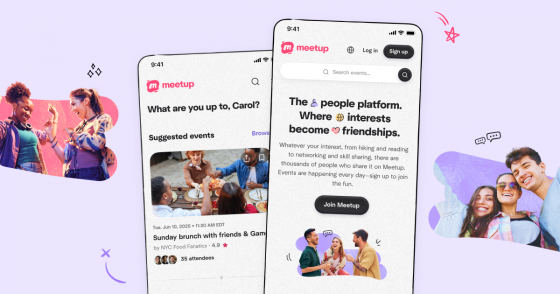
Part of the solution is using a social media platform that has a positive impact on people’s lives. In a cross-sectional study of Meetup from ImpactED at the University of Pennsylvania, there was a clear relationship between the frequency of using Meetup and the positive impact Meetup members experienced. 80% of people who go to Meetup events feel more connected to others and 72% of people reported an increased number of friendships.
People who start Meetup groups also felt the social benefits of becoming organizers in their communities. 89% reported an increased ability to impact the lives of others, 74% say Meetup has made their life better, and 78% reported increased self-confidence.

How to connect safely during a pandemic
This year, Meetup groups have shifted their events from entirely in-person to a combination of online and safe outdoor events. Some organizers are hosting traditional outdoor events like group hiking, while others are getting creative and shifting book clubs to public parks. When they can’t meet outside safely, they host online.
Social connection is about quality, not quantity. Meaningful connections start by finding a group of people you have something in common with or starting a group around a topic that interests you. Some common groups found on Meetup include networks of professionals like software engineers and real estate agents, board game enthusiasts, parenting groups, runners training for marathons, or people hosting conversations related to their identity. If you can imagine it, there’s a group for it on Meetup.
Feelings of isolation must be met with genuine connections with real people and not simply more Zoom meetings. Find your next event or start your own group on Meetup.

Last modified on June 23, 2021