
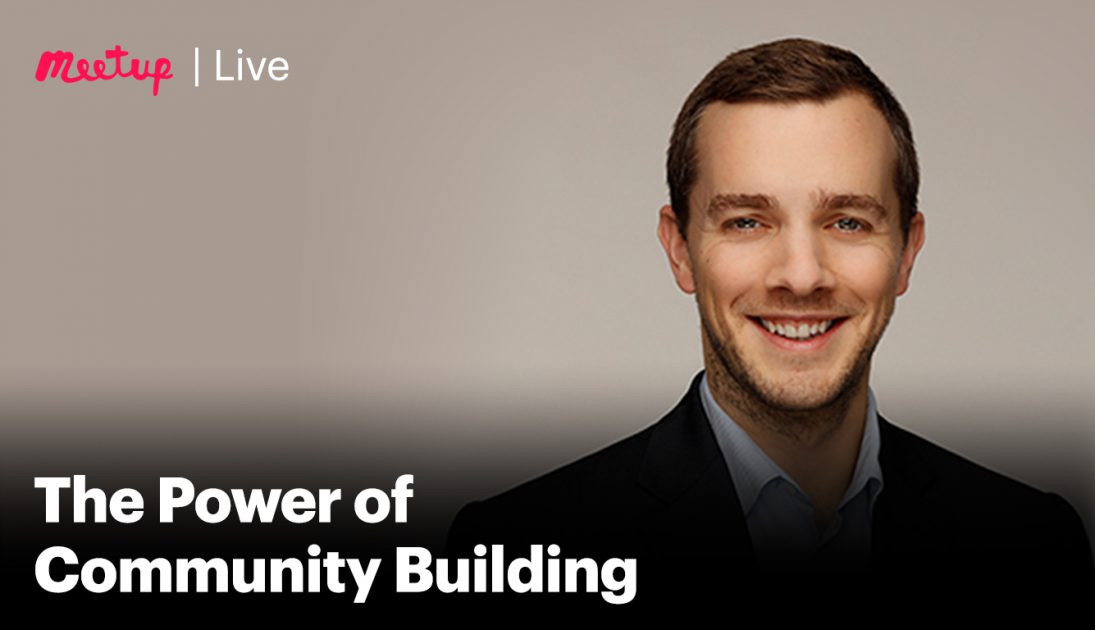



An effective community strategy can help you turn your audiences into your greatest asset. In this Meetup Live event, we’ll be discussing the essentials of community building with special guest Richard Millington. Whether you’re looking to grow a successful community or start a brand new one, you’ll want to hear these lessons for making your group members your main advocates.
Watch Meetup Live for a presentation with FeverBee‘s founder, Richard Millington, who will explain the powerful psychology you can use to engage members in your community.
Main Takeaways:
- There are four things that social groups fundamentally provide an individual, which they typically can’t get from anywhere else (Influence, Explore, Support, Belonging).
We talk about the core value of community. The thing that’s going to get people hooked and engaged – We want to figure out what is the core purpose today. And then what the other things we can expand to as well because all of these things are really, really useful. - Instead of seeing community as a group of problems or an issue to solve, think about the assets of every single member, no matter how small or how simple, to create a better future together. The key point is to make every single member feel like they can make a unique contribution to the group.
- We have to communicate in a more persuasive way than we are today if we want people to be more engaged.
Examples: Use contrast, simplifying the messages, and add emotion or motive - Check out Richard’s book: Build Your Community: Turn your connections into a powerful online community
- This link provides access to the two free chapters of the book too (and some other goodies!)
Top Q&A Questions:
- How can we meet like-minded motivated community members?
- If you don’t have an existing audience, there are two things you can do. One is to begin by finding people on social media and connecting with them.
Otherwise, find out who’s talking about that topic on Facebook, LinkedIn, Twitter, whatever other new social tools and get to know them and connect with them. Find people who do have access to a bigger audience and build a partnership with them.
Also when people do join, what we often don’t do is ask people, “who do you think should be a member of this group?”
- If you don’t have an existing audience, there are two things you can do. One is to begin by finding people on social media and connecting with them.
Otherwise, find out who’s talking about that topic on Facebook, LinkedIn, Twitter, whatever other new social tools and get to know them and connect with them. Find people who do have access to a bigger audience and build a partnership with them.
- I run a mathematics group. We try to focus on factual answers as a way to reduce fluff. Is this a good strategy?
- most people when they think of a community they think it has to be a place with a lot of off-topic discussion with a really close sense of belonging and a strong sense of community. And for many groups and communities, that’s fantastic. But it’s not for every single group, and sometimes if we work in fields of scientists and doctors and professionals, they just want a place to share great and useful information. And then that in itself is what builds those connections and relationships. So I say yes it’s the perfectly fine thing to do.
- For hybrid communities offline and online, how would you bridge the people without tech skills to avoid them feeling excluded.
- This is a good question to ask the members of your community first. This could be an amazing opportunity to really bring the community together and really build this bond so I would look at what is it that we need that could help them overcome that issue, and other members can volunteer to help.

Last modified on July 2, 2021