


Nearly 85% of job positions are filled through networking. Clearly, investing time in personal relationships can create an array of opportunities. But for some, making time for face-to-face meetings can be intimidating, especially in a remote setting. Learn tips to put yourself out there and get in the minds of people who can help you advance your career goals. Who says you can’t network at home?
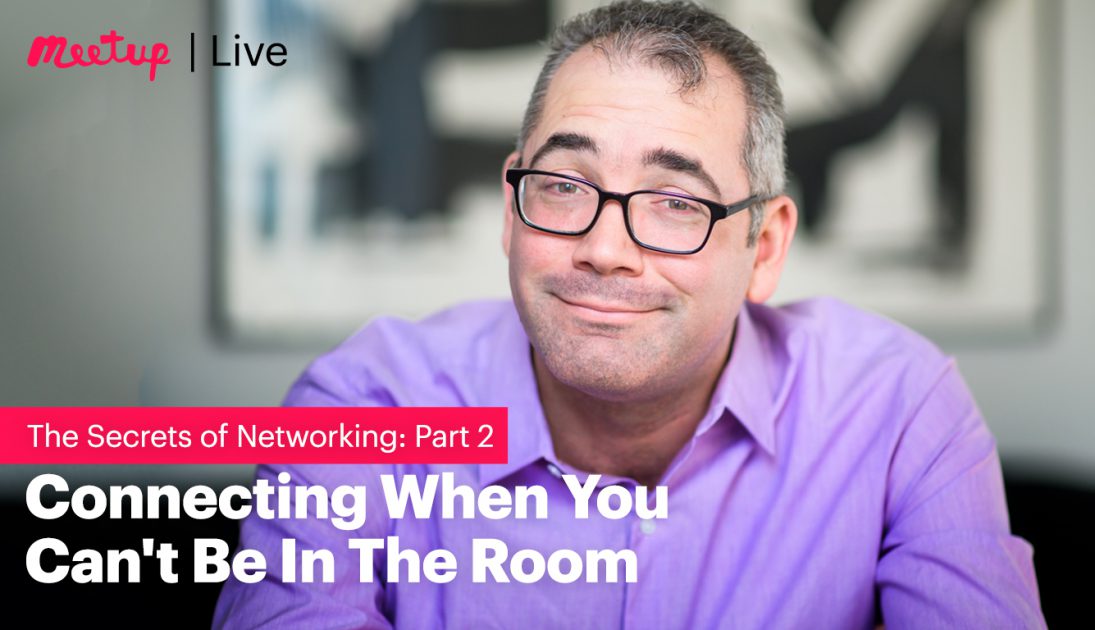
Watch Michael Roderick (CEO of Small Pond Enterprises) in part 2 of The Secrets of Networking as he takes a deep dive into creating powerful relationships that move your career forward. In this workshop, Michael revisits many of his timeless relationship-building principles and addresses the psychological barriers we build around networking. You’ll learn how to reach out without hesitation, host events that get people talking about you, and discover how to get more professional referral.
Main Takeaways:
- The “One Channel Method” means you decide where you would like all of your correspondence to go. Personally, my “one channel” is email. So if somebody reaches out to me via LinkedIn, I will respond, “Great, feel free to send me an email at this address.”
This is one of the best ways to manage all of this online activity that can get overwhelming. - There are four archetypes of people in online events: sharks, dolphins, those who are drowning, and the lifeguards.
- One of the best ways to build your network is to be a lifeguard. Constantly look around you because in every situation, in every scenario, there is somebody who’s struggling (as I call it, “drowning”). Offer help.
- Tips for hosting your own connection-focused events:
- Find a co-host (and focus on what you do best)
- Curate the group
- Find a theme that focuses on collaboration (e.g. podcast hosts and podcast guests; speaker and meeting planners, etc.)
- Use an intake form (more information on profile questions and group approval tools)
- Ice breakers as well as ice melters to get the conversation going
- Give them a way to connect with one another after the event (permission-based)
Top Q&A Questions:
- Examples of email headlines to draw people in?
- How do I reference something that the audience is going to recognize and how do I make them so curious that they need to read the message?
For example, if somebody just wrote an email and they referenced transformers, I might say, “Transformers and networking?”
“Excited to teach you about an industry, the only Industry that studies itself.”
I could have an email subject line that’s just, “Yoda.”
- How do I reference something that the audience is going to recognize and how do I make them so curious that they need to read the message?
- Can you clarify what you mean by boundaries?
- When we’re talking about boundaries, we’re talking about you making a decision about the boundaries around your time. Most people suffer from what I like to refer to as the tyranny of default time, to think that every meeting, every conversation should be an hour. But there are plenty of instances where you can do a 15 Minute call and that is okay, especially if it’s the first time that you’re connecting with them.
- What do you do if your “One Channel Method” conflicts with another person’s?
- You have to ask yourself, “is the frustration or challenge worth the relationship?”
If Elon Musk tells me,”I’m only going to communicate via Twitter with you.” I’m probably going to be like, “okay fine we’ll communicate via Twitter.”
If somebody who’s trying to sell me life insurance is like, “I’m only going to communicate via Twitter with you,” then I’m going to be like, “well, have fun with that.”
- You have to ask yourself, “is the frustration or challenge worth the relationship?”
Resources:
- Watch part I of Michael’s talk here
- Click here to sign up for Michael’s daily emails

Last modified on June 23, 2021