

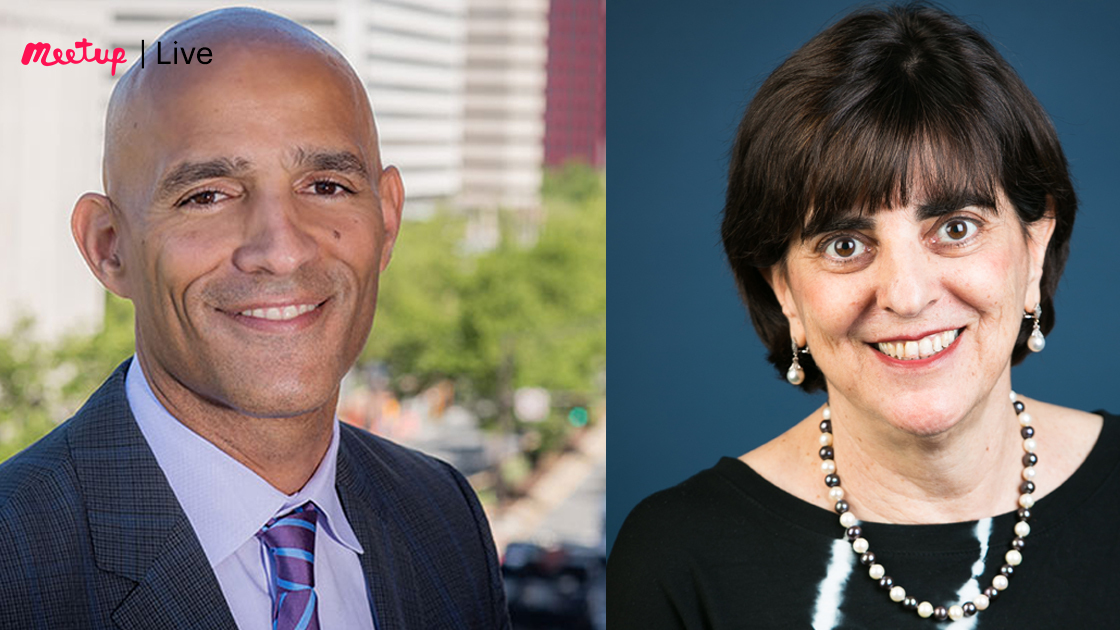



Join John Rice, (Founder and CEO of Management Leadership for Tomorrow) and Ester Fuchs (Director of Urban and Social Policy Program at Columbia University’s School of International and Public Affairs) for a conversation about the history of racism and the policies that have disenfranchised underrepresented minority communities and created wealth disparities within them. Learn what you can do to affect change and dismantle these social injustices.
This event is the second in our series on how to help dismantle social injustice and a continuation of the previous event: How to Help Dismantle Social Injustice.
Panel discussion
What do you see happening within urban policy?
- Ester Fuchs on education, funding, and health care.
- Education is primarily funded through property taxes leaving some communities with less money in their school systems. It accounts for a significant amount of what a school can and cannot do.
What Work is MLT doing to combat disparities and what are you hearing about the experience of underrepresented minorities in your work?
- John Rice on economic mobility.
- 60% of recent college grads are unemployed or don’t require a degree and that’s pre-COVID. That helps to explain the very significant wealth gaps you see between Whites, Blacks, and Hispanics. They have 25% the economic wealth of their peers and that’s including college grads.
What is the history of structural inequality in education and housing? How did we get here?
- Ester Fuchs on post-WWII migration, manufacturing jobs, Supreme Court rulings, and homeownership.
- Federal policy post-WWII helped White GIs buy homes in the suburbs as a part of the GI bill. This policy did not include African American GIs.
- Milliken v. Bradley on the constitutionality of bussing children across school districts.
- Fear Itself: The New Deal and the Origins of Our Time by Ira Katznelson
What are the direct impacts of the disparities Ester described and the current social climate for those you coach through Management Leadership for Tomorrow?
- John Rice on “aha” moments for White folks and maximizing potential for students young professionals.
- Even when White folks understand the history they don’t connect it to People of Color who are in their world. The “aha” moments don’t come until you have very recent examples, like the Police killings and Amy Cooper incident. When you see these examples it forces us to think about how we view People of Color.
- The experience of People of Color will be different than White peers. A third of their mental energy can be focused on questions of how they’re viewed, representation around them, and if they measure up. That takes up mental bandwidth that White peers are not spending time on.
Are companies failing to diversify citing “pipeline issues?”
- John Rice on Black and Hispanic candidates in the job market and their experiences during recruiting.
What needs to change in education, anti-poverty, and housing policy in urban communities and how can we affect change?
- Ester Fuchs on Black Lives Matter protests and capitalizing on social engagement.
- Look local, that’s where people can make the greatest impact. Protest, organize in groups, and vote! It makes a difference who leads our country and cities. You can even run for public office. We need diversity at the table so that the issues come to the floor.
- This a moment of change, please pay attention to your local budget and city. The budget tells you what the priorities are!
What can we do to help in the workplace?
- John Rice on addressing underlying inequalities and how organizations can affect change.
- The path forward to a healthy set of roots is twofold:
- We must increase economic mobility in communities of color, close wealth gaps, and put more power and influence in the hands of People of Color.
- We have to decrease institutional racism. When you have more People of Color who are economically mobile and more diverse workplaces it changes the narratives about race and black people and makes it clear you can’t get away with treating people unequally.
- The path forward to a healthy set of roots is twofold:
Q&A
What do you consider to be racially equitable employment practices?
- John Rice on racially equitable employment practices.
- Focus on moving the needle on representation on Black and LatinX employees at every level of the organization. What is your plan and how are you executing?
- What is your plan to create an inclusive anti-racist workplace?
- What are you doing about pay equity?
- Do you have racially-equitable business practices relative to your suppliers? Who are your law firms? Are your products and services in distributions equitable?
- What are you doing with how you invest in communities of color and advocating for social and racial justice?
How do we stop companies from profiting from bail and prisons?
- Ester Fuchs on the privatization of prisons.
- Do not support the privatization of prisons. The idea that anyone should make a profit from the prison system is outrageous.

Last modified on June 23, 2021