



Together, we can make our mental health care system work for everyone. Minority populations often suffer from poor mental health outcomes because of inaccessibility of high-quality mental health care services, cultural stigma surrounding mental health care, discrimination, and overall lack of awareness about mental health.
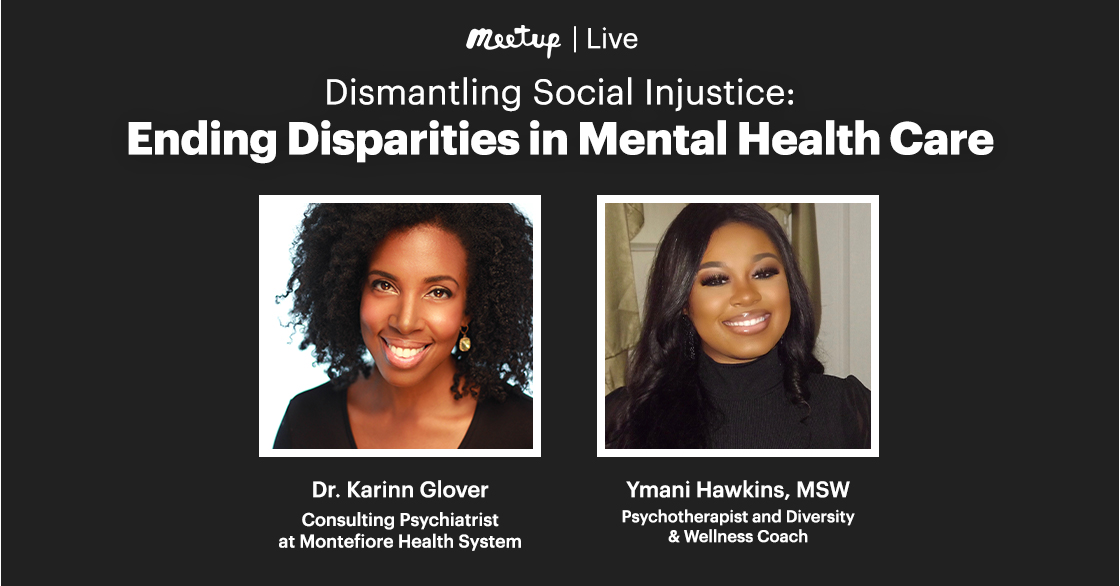
Dr. Karinn Glover, MD, MPH (Consulting Psychiatrist at Montefiore Health System) and Ymani Hawkins, MSW (Psychotherapist and Diversity & Wellness Coach) have a conversation on the historical and systemic factors that have contributed to these disparities and actions you can take to affect change.
From Ymani Hawkins’ mindfulness exercise:
- What do you want to take away from this conversation?
- Please note today’s discussion may evoke feelings of anxiety, sadness, anger, guilt, frustration, or helplessness. This is an opportunity to learn and to listen and give yourself the space to explore infinite possibility and the grace to learn together.
Main Takeaways
- In terms of Mental Healthcare, where are we?
- Dr. Karinn Glover: Mental disorders are common in everybody’s population. The difference for some populations is how easy it is to get connected to care once the problem arises. There are reasons in the Black, Indigenous, and LatinX communities why it’s harder to get care:
- Stigma
- Insurance
- Negative Historical interactions with medial systems
- Ease of understanding culture of person seeking help
- Ymani Hawkins: There are disparities that disenfranchised populations face including access to adequate supply for mental healthcare is different between populations. Intersectionality plays a key and complex role in the system, some of those intersectionalities include race, class, socioeconomic status, and gender. These play a vital role in mental healthcare and we can’t really have a conversation without acknowledging those things.
- Dr. Karinn Glover: Mental disorders are common in everybody’s population. The difference for some populations is how easy it is to get connected to care once the problem arises. There are reasons in the Black, Indigenous, and LatinX communities why it’s harder to get care:
- What are the barriers preventing disenfranchised populations from receiving adequate healthcare?
- Stigma: Mental health conditions are often viewed with black-and-white labels instead of a spectrum with many ways to receive treatment. Mental health conditions may also be viewed as signs of lack of faith or weakness in cultures worldwide.
- Insurance: Access to health insurance and insurance companies that help connect their clients with professionals who have a shared experience.
- Structural stigma: Inadequate availability of employment opportunities, lack of effective health service or transportation or housing options.
- How do we make these topics easier to discuss?
- Education on mental health conditions and being an advocate and sharing our own experiences with mental health.
- Thinking about the language we use and not using inappropriate word like “crazy.”
- Accountability of our own implicit or unconscious biases and listening to others with compassion and understanding.
- We all have a role in doing this work and it’s important to remember that we’re working within systems that have historically discriminated against minorities.
- Education is so important and we want to build a legion of people worldwide who have done the work and built the vocabulary to keep engaging their family and communities in understanding mental health conditions better.
Q&A
- How do individuals assist people of color in both African American and LatinX communities with additional economic help to make mental healthcare more affordable?
- Dr. Karinn Glover: There are a lot of organizations that provide mental health assistance, particularly those who are coming out of being incarcerated.
- NY-based
- National
- As a Black Lesbian woman, how do I disclose to colleagues about the need for mental health space within the workplace?
- Dr. Karinn Glover: Going through HR, when they’re focused on keeping their talent in house and the company’s employees happy and safe, to seek safe spaces for conversations. It’s important to gauge whether the company is having open discussions and whether to start a group and think about the nature of privacy at work and how much you want to disclose. Not every work climate is ready for those conversations.
- Ymani Hawkins: Ask yourself if the same service would be provided for a White cisgender male. If so, then that’s something that you too should also receive. These conversations take boldness and emotional labor, and you may have the encouragement to initiate healing circles or implicit bias training. You may want to test the water there before going forward.

Last modified on June 23, 2021