


What does financial freedom look like for you? A growing savings account? Regular retirement contributions? A robust stock portfolio? In this Meetup Live event, we’re talking about financial stability.
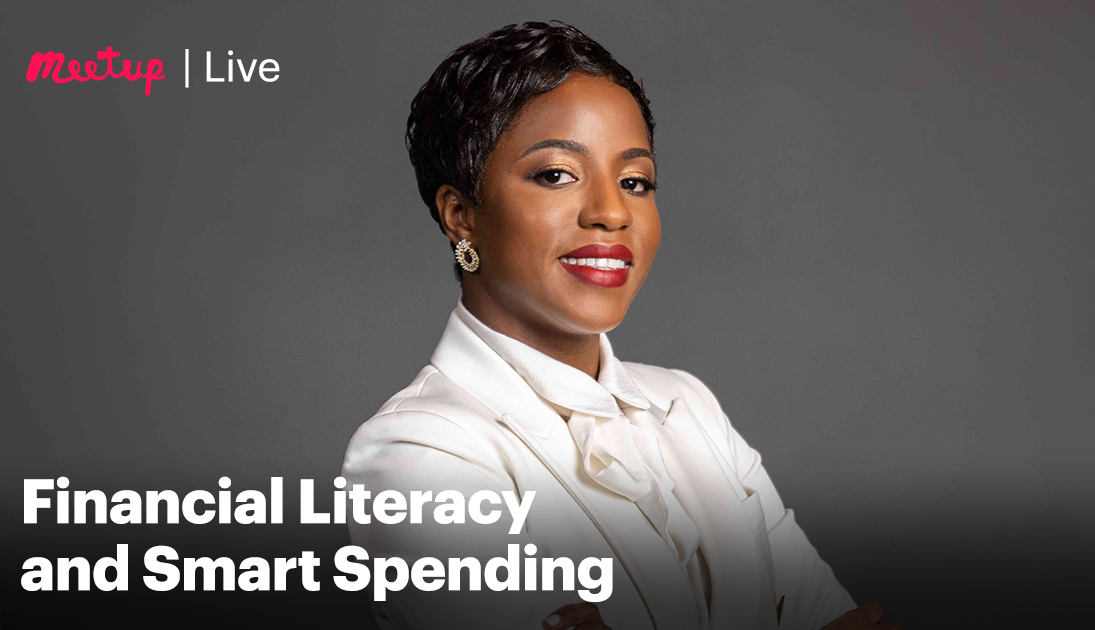
To celebrate Financial Literacy Month, Bola Sokunbi, founder of Clever Girl Finance, joined Meetup Live to teach the basics of minimizing debt, saving, retirement planning, and more. You’ll learn to set achievable goals so you have the confidence to master your finances and worry less about paying the bills.
Main Takeaways on Finance:
- “The foundation for personal finance is really adjusting your mindset to be focused on being able to achieve your financial goals. It’s believing that despite not knowing the answers to getting to your end goal, you can achieve it if you are intentional.”
- “Staying organized with your finances, first of all, means that you need to get a sense of the big picture of your finances right? What are all your bills? Have you recently checked your credit reports? What are your passwords, your bank accounts, is all this information that you want to have in one place? It could be a secure spreadsheet, or in your notes app on your phone that you lock with a password. You just want to have this information handy, and then you want to build those bill payments into your calendar. Set reminders in your calendar using your Gmail or Yahoo, or using your phone’s calendar so that you get those reminders and you don’t pay your bills late.”
- “The idea of budgeting makes some people feel apprehensive because they think it’s like a punishment. They think it’s like a restriction but you know just to remind your budget is you telling your money what to do, you are the boss. It’s also very important that you give yourself the opportunity to enjoy your life because at the end of the day life is not just about money. You want to build in those simple pleasures those simple enjoyments within reason, into your budget, so that as you’re saving, as you’re paying down debt, as you’re pursuing your other financial goals, you don’t start to feel like all you’re doing is living to pay bills or to save money because what happens when you start feeling like that is you end up giving up on your financial goals. So it’s important to create a line item in your budget for the things that bring you happiness.”
Top Q&A Questions & Resources:
- Is it better to avoid all kinds of debts altogether?
- “Yeah, if you don’t need to, why take debt on–just build your investments on your assets, you know. For a lot of people buying a home is a debt that they take on, because not many people have hundreds of thousands of dollars to buy a house in cash, and not many people want to tie up that large amount of money at a low-interest rate when they could be investing, for example, in the stock market, and getting a higher rate of return on their investment. Things like real estate, purchasing a home, and low-interest-rate things might make sense to take on that debt and create a plan to pay off. But if you don’t feel comfortable about it then avoid the debt altogether, you don’t need to leverage it, then don’t do it”.
- How much should I contribute right now to a 401k versus putting money away to savings?
- “One thing to keep in mind about saving is that unless you need the money in the short term within the next 5 years, you actually don’t want to keep it in cash and this is because of inflation in the US. As a result of the pandemic our inflation rate is somewhere around 7%, right? That’s a lot of money! Prior to the pandemic, the average inflation was about 2.5%. The longer you have cash in a savings account, the less it’s worth every year. If you need the money short term you’re saving to buy a house, you’re saving for a business, you’re saving for something short-term you want to have access to that money when you need it. But for the long term, you want to be investing. So I would say in cash, have your emergency savings and have your short-term goal money, and then in a 401k, if you are able to max out in the US.
- What are good apps to get your finances on track?
- “There are so many great apps, I would say it’s less about which app you use and more about you consistently using the app. I always tell people when they ask for app recommendations, go into your smartphone and type in budgeting apps, and download the first 5 that come up, open them up and test them. Is it easy to connect to your bank accounts? Do you like the colors? Is it difficult to navigate? That’s the elimination method that you land on the app that you enjoy using and you are happy to open. A really popular app is Mint in the app store there’s also an app called You Need a Budget, but there are so many different ones. It’s all about finding the app that appeals to you and your lifestyle the most that you’re actually gonna click on every day.”
Resources:
- Clever Girl Finance: 30+ Completely free courses
- Clever Girl Finance Instagram

Last modified on April 19, 2022