

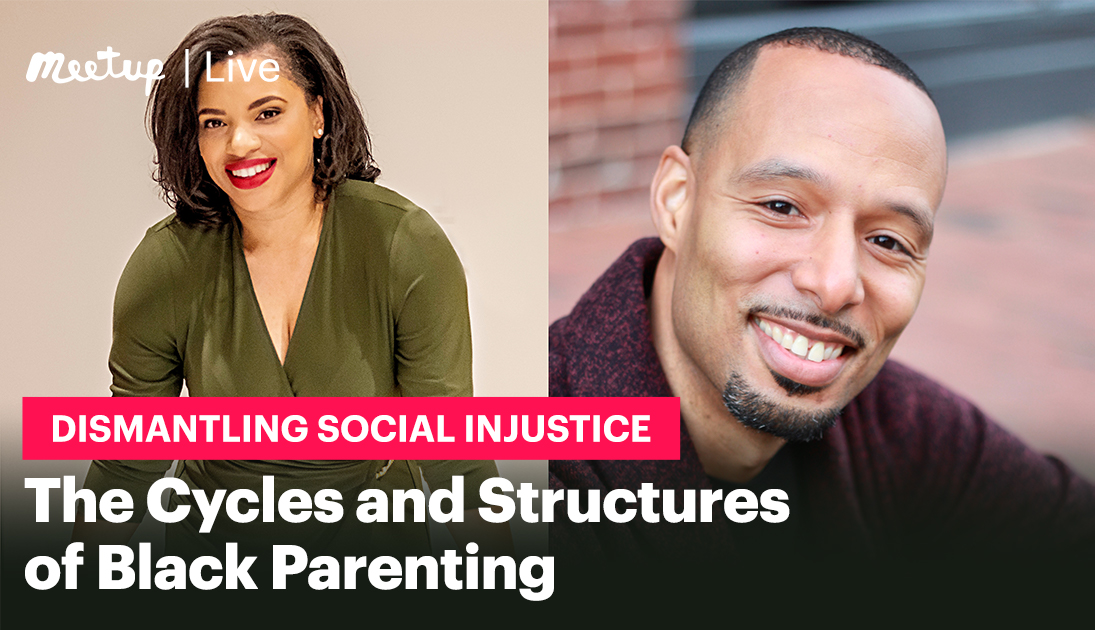


Parenting is one of life’s great undertakings with new highs, lows, and lessons no matter how old your children get. For Black parents, there are other facets to the experience of raising a family that goes back generations. In this installment of Meetup Live’s Dismantling Social Injustice series, you’ll hear about the historical background of Black family structures, how these structures have evolved, and first-hand accounts of where they are headed.
Watch this Meetup Live recording to hear from panelists Fatima Smith, a social mom-trepreneur and advisor at The Rise Journey, and Dar’Ron Anderson, a clinical father engagement specialist and author of Daddy’s Green Book, discuss the generational and historical influences on Black parenting. You’ll hear how they are fostering supportive patterns of care within their own families and are coaching others to do the same. Learn how Fatima and Dar’Ron help others identify and correct any generational patterns that stand in the way of family flourishing.
Main Takeaways on Black Family Structures:
- Dar’Ron: There are certain things that we actually have to worry about or be concerned about, that others do not right, you know. For example, we talked a little earlier, about our safety. There are certain things that I speak about as a father to my children about their safety, like police brutality, there are certain things that you have to watch out for, you have to be aware of, and those are some of the things that I don’t think a lot of people have to go over in their families you know as black families do. What are you wearing? How are you behaving? What is your hair look like? What is the expression on your face? You know. What does that look like to police officers, if you get pulled over?
- Fatima: The ability to sit down and be able to pause and think about your responses to your child and plan out things, that’s a point of privilege. It’s not even just a black thing it’s a class thing, too. If you’re working two jobs, you’ve got multiple kids, and let’s throw in a child with different abilities. Gentle parenting is not a one-size-fits-all scenario, and so I think trying to figure out how to unlearn the things that we were taught as far as corporal punishment. As far as internalizing the oppressor of this was done to me, so now I’m going to do it to you as a right of passage, instead of pausing to think “Was that helpful? Is there a better way?” If you haven’t unpacked your own trauma I think it’s harder to be in a position to do that.
- Dar’Ron: The topics parents should focus on when considering their children’s future is emotional well-being: For example, discuss money: be open with them, and talk to them about their finances. Generational wealth is a real thing we have to be real. You can’t teach them little by little about finances.
- Fatima: The topic of consent is an important lesson. I’m a survivor of intimate partner violence and sexual assault as a child and as an adult and so consent is really really important to me. Consent, autonomy, boundaries, all of that should be a priority for parents, and not just in the context of like intimate relationships or stranger danger, but even teaching children to be able to learn their voice, and how to like how to harness your voice, and then use it.
Top Q&A Questions & Resources:
- What advice can you give to someone who recognizes the benefits of therapy but has a partner who’s adverse or fearful of the idea?
- Dar’Ron: The first time, I would say, walk with them, hold their hand through it. Sometimes people don’t have to go through therapy by themselves the first time. There are many different types of therapy so you want to find that therapy that fits you two.
- Dar’Ron: The first time, I would say, walk with them, hold their hand through it. Sometimes people don’t have to go through therapy by themselves the first time. There are many different types of therapy so you want to find that therapy that fits you two.
- You discussed the ownership of black families, when do we take back ownership of our black families and move away from social services?
- By in large no one wants to be dependent on anybody that’s regardless of race, I think all of us have a vision of what a good life is and that’s gonna vary but most of us, just want our basic needs, and maybe a little some extra on the side. I think this idea that black families are dependent on social services, I think, is a false narrative.
- What do you say are the main things that you’d love to see in picture books or visuals for children?
- Dar’Ron: I would like to see shared parenting right. I think it’s important that children see that dads just don’t go out and work. For example, I have made breakfast and lunch for my family every single morning for the past 10 years. My wife makes dinner. To see that more would be so beautiful because that teaches our children that there are no gender roles. Everything is fair, everything is equal.
Resources:
Fatima Smith
The Rise Journey
Dar’Ron Anderson

Last modified on April 25, 2022