
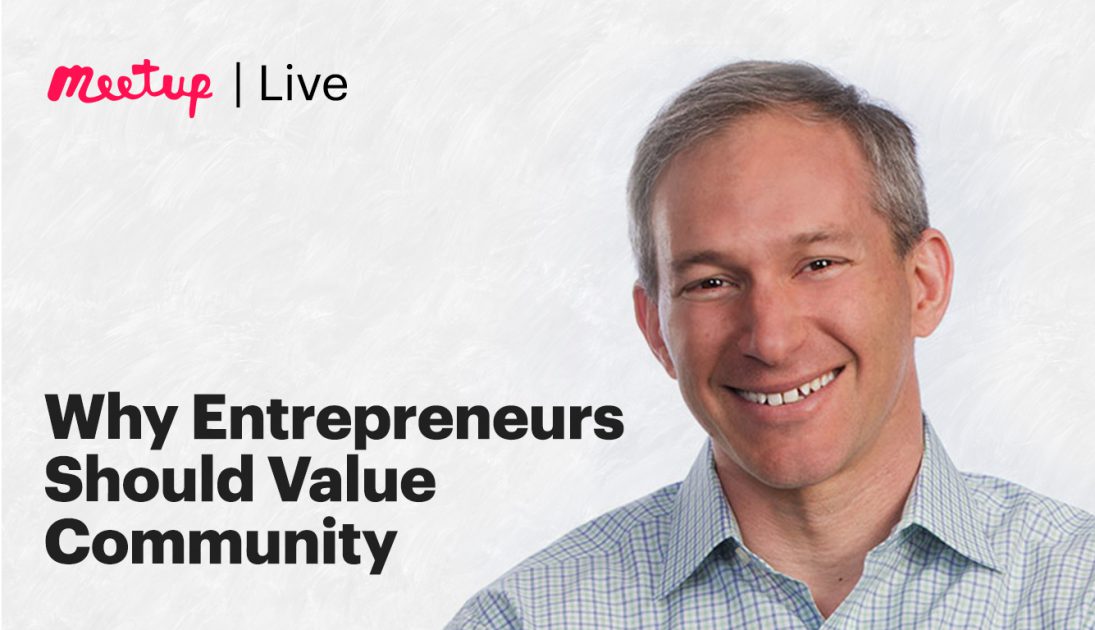


Today, an increasing number of entrepreneurs are prioritizing building community driven companies. Honing in on a community-centered mission provides profound opportunities for companies around the world.
Jeff Bussgang, Senior Lecturer at Harvard Business School and Flybridge General Partner & Co-Founder, will share takeaways from his new ebook, The Community Playbook for Founders. Learn key strategies like shaping a narrow target persona, defining a community-focused business objective, crafting a community engagement plan, and understanding what community success looks like.
Main Takeaways and Resources:
- There are three critical principles of community building that all of our research has distilled down to, if you want to form a community and do it effectively.
You need to focus on the who (your audience), set clear objectives, and create a set of engagement activities. - Seven key elements to lay the groundwork for community success:
- A shared purpose and values
- Simple, easily accessible value consumption
- Simple, easy, navigable value creation
- Clearly defined incentives and rewards
- Carefully crafted accountability
- Healthy diverse participation driven by good leadership
- Open, objective governance and evolution
- Resources:
- Link to Jeff’s presentation
- Free ebook: The Community Playbook for Founders – Strategies and stories for founders building community-driven companies
- Other books by Jeff on entrepreneurship
- Article on Harvard Business Review: “When Community Becomes Your Competitive Advantage“
Top Q&A Questions:
- How would you recommend attracting new members to communities?
- You have to have a strong value proposition for why they’re going to come to the community. And you want to be very narrow and who your target. Look for ways to articulate the value that even go beyond your actual product.
- What are sample incentives for nonprofit communities?
- People associated with and tied to that nonprofit feel like they’re making the world a better place, and that they’re contributing to the educational system of the country. They’re contributing to a sense of greater justice and that in and of itself is the reward.
So, as a nonprofit, and even a for-profit enterprise, if you can have people feel like they’re fulfilling a part of a mission, a personal mission or purpose in that sense of purpose that they care about and are deeply invested in that can be a very powerful and effective way of getting people to contribute to nonprofit and civic communities.
- People associated with and tied to that nonprofit feel like they’re making the world a better place, and that they’re contributing to the educational system of the country. They’re contributing to a sense of greater justice and that in and of itself is the reward.
- How do you suggest handling the 80/20 effect where only a small percentage of the community members are actively engaged and sharing stories Ideas and experiences? Can there be too many observers and not enough doers?
- It’s very natural that you’re going to have some members of the community be consumption-only, leaned back, and passive. And that’s okay as long as you have that 20% that’s engaging the other 80%.

Last modified on June 23, 2021